FujiCast 166 Part 1 Interview With Marketing Manager Andreas Georghiades: Fujifilm X-H2 Coming With Next Generation Sensor and Processor, Japan vs China, Outdated Lenses, and More


Fujicast is back again with Manager Andreas Georghiades (123, 4). You can listen below or read my summary the podcast is 1h 22m long:


Ask Andreas Summary

  • Will be split across two weeks
  • X-E4, XF27mm f/2.8, XF70-30mm, and GFX100S was announced last week
  • Fujifilm is trying to make the X-E line an interchangeable X100
  • XF27mm f/2.8 now has an aperture ring which makes the focus ring smaller
  • XF-70-300mm gives you the possibility to get extend your range up to 900mm with a teleconverter
  • New firmware updates weren’t spoken about much
  • GFX100S is about the size of a GFX50S without the hump on the back
  • The GFX100S can either be viewed as an improved GFX50S or a shrunken down GFX100
  • GFX100S is a huge deal for Fujifilm and should be available from March
  • GF80mm f/1.7 is a stunning portrait lens for people that want the creamiest bokeh
  • It took 4 years this month to go from GFX50S to GFX100S
  • Fujifilm released some massive updates for the GFX100 and its good to see this camera come along because it reinvigorates the range
  • Everyone wants everything as soon as they can have it and Fujifilm doesn’t hide things from customers and they confirmed a next-gen X-H2 is coming when there is a leap in technology.
  • New X-H2 will come when a new sensor and processor come out if you read between the lines of what has been said, but he has no information about when it will come
  • The 26MP sensor has been around a while so we might see a new sensor and processor soon
  • X-T3 could be viewed as a stop-gap to the X-T4 so the next generation should have a new sensor and processor
  • GF80mm f/1.7 is slightly smaller and slightly cheaper than the GF110mm f/2
  • TCL and WCL for X100 have no known plans to be updated
  • Accessories aren’t discussed much during product meetings and this is the first time he’s been asked if there is an update coming for the TCL and WCL
  • Some put the TCL and WCL on the Fujifilm X70 but it was never designed for that
  • Firmware updates are a commercial decision so firmware updates are not based on a schedule
  • Fujifilm thinks about how many cameras are out there, how long will they be used for, and how long will they be sold for to decide what firmware updates to push out
  • Firmware development happens between the development of cameras so it isn’t as simple as a copy-paste job
  • Andreas Georghiades would love an X80 but no news to share
  • When the X70 was launched in 2016 it didn’t sell well, but some people got it
  • In 2016 Fujifilm also had to deal with the earthquake to prioritize what to put resources towards due to the sensor shortages
  • This all makes it hard to justify making a camera like the X80 to the people that assign resources since the camera never did well
  • Fujifilm doesn’t do IR conversions
  • China and Japan both have the same quality controls for manufacturing
  • Made in Japan isn’t really a big deal anymore and it hasn’t been in 20 years
  • China makes some of the best stuff today
  • You should take comfort in Fujifilm updating lenses like the XF10-24mm and XF27mm so they have already started updating dated lenses
  • Fujifilm has opened their protocols for third parties, but can’t say what third parties are doing with them
  • When cameras get popular more adapters are created and the GFX has a ton of smart adapters so third parties will likely make lenses for the GFX
  • Lenses are most affordable to make when they can reuse the design on the bodies of 3-4 manufactures

Fujifilm X-E4: B&H Photo / Amazon / Moment / Adorama
Fujinon XF70-300mm f/4-5.6: B&H Photo / Amazon / Moment / Adorama
Fujinon XF27mm f/2.8 II: B&H Photo / Amazon / Moment / Adorama

Fujifilm GFX100S: B&H Photo / Amazon / Moment / Adorama
Fujifilm GFX100: B&H Photo / Amazon / Adorama
Fujifilm GFX50R: B&H Photo / Amazon / Adorama
Fujifilm GFX 50S: B&H Photo / Amazon / Adorama

Fujinon GF80mm f/1.7: B&H Photo / Amazon / Moment / Adorama

Follow Fujiaddict on Facebook, TwitterInstagram, and YouTube

Plus our owners’ groups
Fujifilm GFX Owners Group
Fujifilm X-H Owners Group
Fujifilm X-T Owners Group
Fujifilm X-S Owners Group
Fujifilm X-Pro Owners Group
Fujifilm X-E Owners Group
Fujifilm X-A Owners Group
Fujifilm X100 Owners Group

Posted in Fujifilm GFX, Fujifilm GFX 100, Fujifilm GFX 100 Megapixel, Fujifilm GFX 100S, Fujifilm GFX 50R, Fujifilm GFX 50S, Fujifilm GFX100 IR, Fujifilm X-H2| Tagged , , , , , , , , , , , , , , , , , , , , , , , , , , , , , , , , , , , , , , , , , , , , , , , , , , , , , , , , , , , , , , , , , , , , , , , , , , , , , , , , , , , , , , , , , , , , , , , , , , , , , , , , , , , , , , , , , , , , , , , , , , , , , , , | Leave a comment

Technical Analysis: Fujifilm GFX, GFX IR, IR Hot Spots, Adapted Glass, and More


Jim Kasson published more testing with the Fujifilm GFX Cameras after our last post. Below are quotes and links to all of his great technical testing that he makes available to the public completely free of charge since we last checked in:

The Last Word – Diffraction and sensors

The question of the visibility of the diffraction has two answers, depending on how you ask the question. If you ask the question “when does the diffraction dominate the sharpness of a well-focused subject”, then the size of the pixel aperture is important (not the pixel pitch: that affects aliasing). When a lens is stopped down to f/11, f/16/ or f/22 and focused accurately, it is likely that the lens aberrations are unimportant compared to the blur induced by the Airy disk. The size of the blur at the sensor is, neglecting phase effects, equal to the size of the convolution of the effective pixel aperture and the projected Airy disk. If the Airy disk is much larger than the pixel aperture, then virtually all the blur you see in the image will be due to the diffraction.

The Last Word – Does repeated JPEG compression ruin images?

Conclusions

  • In Photoshop, JPEG recompressions don’t “walk”; they are the same after the first iteration.
  • Changes from the first to the second iteration are small.

The Last Word – Leica 90/2 Apo-Summicron ASPH-M on GFX 50S

The captions are the subject distances. It’s not an internal focusing lens, so I thought it might do better at close focusing distances. Maybe it does, but not enough to make much difference.

It’ll be fine for square shots, and maybe OK for 4:5 aspect ratio ones, but not for 4:3.

Things improve a bit if you stop down, but the reason to use this lens is to use at between f/5.6 and f/2.

The Last Word – IR images without demosaicing, revisted

There’s a little more contrast in the balanced image, and it is maybe a hair sharper. I’ll bet I could sharpen up the AHD image to make the sharpness equivalent, though.

My take is that there’s not much to be gained from this technique that applies to real-world photography.

The Last Word – Leica 280/4 Apo-Telyt R at 950 nm on GFX 50R

I guess the question is going to be whether to use the lens at f/8 and deal with the slight vignetting, or to use it at f/11 and suffer the diffraction, which is about twice as bad at 950 nm as it is in visible light. I’m thinking that f/8 is the plan.

The Last Word – Fujifilm 250/4 in 830 nm infrared on GFX 50R

I put a B+W 830 nm lowpass filter on my LifePixel-modified (720 nm option) GFX 50R and checked for hot spots on distant scenery with a +100 contrast boost.

The Last Word – Leica 280/4 Apo-Telyt R on GFX 50R in infrared

This is a useful lens with some minor advantages over the Fujifilm 250. It’s more compact, and has a much better — dentented! — collar. If you’re making long series of exposures, you can be confident that the focus won’t drift, which is not something you can say about the Fuji 250.

The Last Word – CO 60/4 UV-VIR-IR on IR-modified GFX 50R

The Schneider lens is much less expensive than the CO macro, and would probably be more cost-effective. The CO lens does have hotspots at some macro distances.

The Last Word – Infrared hotspotting

Yesterday, I received a Fujifilm GFX 50R back from LifePixel, who had modified it with a 720 nm infrared conversion. The modification consists of the removal of the IR-blocking filter — aka hot mirror — and its replacement by a filter that blocks visible light and passes infrared light with wavelengths shorter than about 720 nanometers.

The Last Word – Full frame fisheye on GFX 50R, Z7

f you’ve managed to find a smart adapter for the GFX that takes Nikon E lenses, it’s worth a try.

The Last Word – Schneider 90/4.5 Apo-Componon HM on GFX 50R, f/5.6, f/8

Looks like f/8 is the sweet aperture for this lens. It also looks like there’s some room for movements.

The Last Word – Schneider 90/4.5 Apo-Componon HM on GFX 50R

That is quite sharp. Lots of aliasing, thanks to the small pixel apertures on the GFX 50x cameras… This is good performance, but with respect to the corners, my socks are firmly in place. I’ll try stopping it down a bit.

The Last Word – Sony 135 STF on GFX-50R, bokeh visuals

Now I’m going to let you see what the bokeh looks like in images, both with transition-focus areas, and far out of focus ones.

The Last Word – Sony 135 STF on GFX-50R, bokeh

There are two pieces to bokeh. The first is what things look like when they are well out of focus (OOF), and the second is how the transition from OOF to in-focus happens. The second is complicated, but the first is simple.

The Last Word – Sony 135 STF on GFX-50R, sharpness

That is quite sharp. Lr’s demosaicing is providing a little sharpening, too. The small microlenses int he GFX 50x cameras are doing their part.

The Last Word – Sony 135 mm STF on GFX 50R

To my surprise and great pleasure, it covers the 33×44 format with no vignetting.

The Last Word – Fuji 30/3.5, 32-64/4 on GFX 50x, foliage

Diffraction has equalized things. These lenses are very close in this test.

The Last Word – Fuji 30 mm f/3.5 OOF PSFs

There is not much physical vignetting, which shows up as “cat’s eye” shapes off axis. There is a slight bright ring around the outside of the PSFs, which will cause the bokeh to be edgier than it would be if they were flat disks. The onion ring artifacts are minimal.

I call this reasonably good performance. Quite acceptable, considering that hardly anyone buys a wide, fairly slow lens for its bokeh.

The Last Word – Fuji 30 mm f/3.5 focus curvature

I used the quick-and-dirty focus curvature test (Photoshop > Filter > Stylize > Find Edges, then convert to B&W) on a picture of my driveway and entry pavers with the 30 mm f/3.5 Fuji G-mount lens wide open on a GFX 50S.

The Last Word – Fuji 30 mm f/3.5, 32-64 mm f/4, GFX 50S, Siemens Star

I used to say that the Fujifilm 32-64 mm f/4 was the second best zoom I’ve ever used — after the Nikon 180-400/4. But then the Fuji 45-100 f/4 came along and I decided it was a two-way tie for second. The obvious standard for judging the new Fujifilm 30 mm f/3.5 is their great zoom, and that’s what this test is about. I used a low-contrast Siemens star for a target.

The Last Word – Fuji 30 mm f/3.5 screening test

The Last Word – Fuji GFX auto focus bracketing step size

Using a GFX 50R and the 23mm f/4 lens, I counted the number of exposures the camera made to go from 1 meter to infinity in auto mode, and manual mode with step sizes of 10, 5, and 2.

The Last Word – How focus-bracketing systems work

With both the Nikon and the Fuji systems, the first step is to pick the step size based on your tolerance for blur in the stacked result. Then pick the near focal distance. Experiment to see how many shots will be necessary to get to the desired far focal distance, varying the f-stop if you wish (a narrower f-stop will require fewer steps; f/11 will require half as many steps as f/5.6.).** Once you’ve done this a few times, you’ll have a pretty good idea how many steps it will take. If the lens is longer or the subject is closer, it will take more steps. When you get really close, it will take a lot of steps, and you may wish to allow more blur by making the step size larger. At 1:1, image space is a mirror of object space, and the step size in the image field will be the step size in the object field; that means steps in the object field of a few micrometers.

The Last Word – Photography and trade-offs

Fifty years ago, I used to occasionally do exposure bracketing. I stopped doing that, because I found that, by intentionally making images at other than what I thought was the right exposure, I minimized the probability that the correctly exposed image had all the other elements that I was looking for (It was also expensive, which is no longer an issue).

The Last Word – Fuji 23/4 on GFX 50R, 20/1.8 Nikkor S on Nikon Z7

In this case, you get what you pay for. On the other hand, you can make quite nice landscape photos with the 20 mm Nikkor and a Z7.

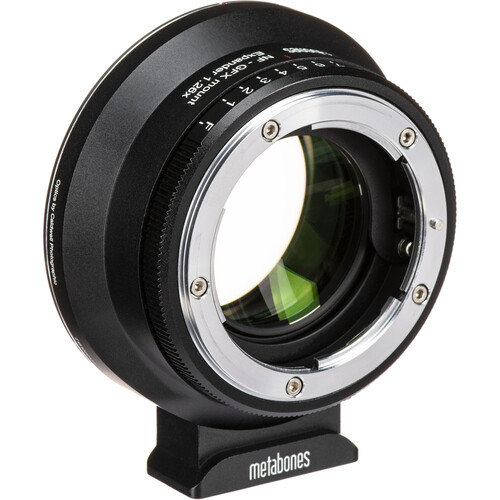
The Last Word – Metabones 1.26x Expander on GFX 100 with Otus 55

I consider this an impressive performance for the Metabones expander. You’ve got to expect some loss in quality with a teleconverter, but this is quite modest. Of course, as with most adapters, I would expect the degradation to vary with the lens, with the shorter lenses being the most problematic. But that’s a test for another day.

The Last Word – Camera differences in Adobe Color Profile

The Last Word – Calibrating out the camera when making color profiles

The Last Word – Chromaticity shifts with the a7RIV, Z7, and GFX 100

The Last Word – Camera differences in color profile making

Fujifilm GFX News, Rumors, and Collaboration
Fujifilm GFX Owners Group

Follow Fujiaddict on Facebook, TwitterInstagram, and YouTube

Fujifilm GFX100S: B&H Photo / Amazon / Moment / Adorama
Fujifilm GFX100: B&H Photo / Amazon / Adorama
Fujifilm GFX50R: B&H Photo / Amazon / Adorama
Fujifilm GFX 50S: B&H Photo / Amazon / Adorama

Fujinon GF80mm f/1.7: B&H Photo / Amazon / Moment / Adorama

Posted in Fujifilm GFX, Fujifilm GFX 100, Fujifilm GFX 100 Megapixel, Fujifilm GFX 100S, Fujifilm GFX 50R, Fujifilm GFX 50S, Fujifilm GFX100 IR| Tagged , , , , , , , , , , , , , , , , , , , , , , , , , , , , , , , , , , , , , , , , , , , , , , , , , , , , , , , , , , , , , , , , , , , , , , , , , , , , , , , , , , , , , , , , , , , , , , , , , , , , , , , , , , , , , , , , , , , , , , , , , , , , , , , , , , , , , , , , , , , , , , , , , , , , , , , , , , , , , , , , , , , , , , , , , , , , , , , , , , , , , , | Leave a comment

DPRTV: Fujifilm X-E4 COVID First Impressions Review – Get Well Soon Chris!

DPRTV host Chris Niccolls caught COVID and is quarantined from his family and Jordon Drake that remain uninfected thankfully. To pass the time he put together this Fujifilm X-E4 First Impressions Review. We hope he gets well soon. Below is a summary of his brief video review:

  • Handling is the biggest reason to get this camera
  • The X-E4 looks and feels great
  • Fujifilm is trying to make the X-E4 look like the X100, but it doesn’t quite have the right feel
  • The dials are very well dampened
  • USB-C port that comes with a headphone jack adapter in addition to an internal mic input and micro HDMI port
  • With the new XF27mm lens, the camera is basically identical to an X100V in size and weight
  • X-E4+27mm f/2.8 449g and X100V 479g
  • Image quality and AF should be about the same as the X-T4 since the processor and sensor are the same
  • 8fps mechanical shutter, but faster in electronic shutter mode
  • Single UHS-I SD card slot
  • 20 lossless compressed RAW shots before the camera slows down
  • NPW-126S battery 460 CIPA rated shots per charge
  • 1.62 million dot rear touch screen that tilts vertically and sits flat
  • The offset EVF is a big draw
  • 2.36 million dot EVF has poor eye relief
  • Fujifilm X-S10 is only $100 more, but this is like an X100V style camera with interchangeable lenses
  • If you want small, simple, and stylish this camera is for you

Please don’t forget to follow us on FacebookTwitterInstagramYouTube

Plus our owners’ groups
Fujifilm GFX Owners Group
Fujifilm X-H Owners Group
Fujifilm X-T Owners Group
Fujifilm X-S Owners Group
Fujifilm X-Pro Owners Group
Fujifilm X-E Owners Group
Fujifilm X-A Owners Group
Fujifilm X100 Owners Group

Fujifilm X-E4: B&H Photo / Amazon / Moment / Adorama
Fujinon XF70-300mm f/4-5.6: B&H Photo / Amazon / Moment / Adorama
Fujinon XF27mm f/2.8 II: B&H Photo / Amazon / Moment / Adorama

Posted in Fujifilm X-E4| Tagged , , , , , , , , , , , , , , , , , , , , , , , , , , , , , , , , , , , , , , , , , , , , , , , , , , , , , , , , , , , , , , , , , , , , , , , , , , , , , , , , , , , , , , , , , , , , , , , , | Leave a comment

Fujifilm GFX100S vs Other Medium Format Cameras vs Sony A1 Size and Lens Comparison


The Fujifilm GFX100S looks extremely small in comparison to its medium format competitors, even the Hasselblad X1D makes it look small at times and it still has a 50MP sensor inside. The X1D is a little skinnier and a little shorter than the GFX100S, but it lacks IBIS and the 102MP sensor inside the GFX100 and GFX100S. Surprisingly Hasselblad and Fujifilm have a lot of matching lens options that can be compared so if you are interested in more comparisons checkout camerasizecomparison for more information. You can also see my GFX vs X1D glass showdown here.

The Fujifilm GFX100S is even small enough to compare to the new Sony A1 with a lens attached, but the Sony does squeeze out the win the majority of the time if system size is your top concern. I’m not sure how they will make the GFX much smaller in the future, but I look forward to a GFX100R camera in the future. If Fujifilm excludes IBIS from the R line it could release a camera even smaller than the Hasselblad X1D, but it will require good form to use.

As for the Leica S line and Pentax 645 they are still clinging to a dated DSLR style design that won’t get much smaller, but do offer other advantages. I am not a fan of the Pentax 645, but there is a place in my heart for the Leica S because I captured some of my favorite photos of my children while they were young playing since the Leica S2 has a decent AF system. At this point, I think the only company that Fujifilm has to worry about is Hasselblad in the medium format space, but Leica could surprise us especially if they price their cameras reasonably.

Fujifilm GFX News, Rumors, and Collaboration
Fujifilm GFX Owners Group

Follow Fujiaddict on Facebook, TwitterInstagram, and YouTube

Fujifilm GFX100S: B&H Photo / Amazon / Moment / Adorama
Fujifilm GFX100: B&H Photo / Amazon / Adorama
Fujifilm GFX50R: B&H Photo / Amazon / Adorama
Fujifilm GFX 50S: B&H Photo / Amazon / Adorama

Fujinon GF80mm f/1.7: B&H Photo / Amazon / Moment / Adorama
Fujifilm H Mount Adapter G: B&H Photo / Amazon / Adorama

Leica S3: B&H Photo / Amazon / Adorama
Hasselblad X1D II 50C: B&H Photo / AmazonAdorama
Pentax 645Z B&H Photo / Amazon / Adorama

Sony A1: B&H Photo / Amazon / Moment / Adorama

Posted in Fujifilm GFX, Fujifilm GFX 100, Fujifilm GFX 100 Megapixel, Fujifilm GFX 100S, Fujifilm GFX 50R, Fujifilm GFX 50S, Fujifilm GFX100 IR| Tagged , , , , , , , , , , , , , , , , , , , , , , , , , , , , , , , , , , , , , , , , , , , , , , , , , , , , , , , , , , , , , , , , , , , , , , , , , , , , , , , , , , , , , , , , , , , , , , , , , , , , , , , , , , , , , , , , , , , , , , , , , , , , , , , , , , , , , , , , , , , , , , , , , , , , , , , , , , , , , , , , , , , , , , , , , , , , , , , , , , , , , , | Leave a comment

Fujifilm Introducing the GFX100S and GF80mm Plus 3 Things You Might Have Missed

Fujifilm released their official introduction video for the GFX100S and GF80mm and it largely focuses on how portable the GFX100S is compared to the GFX100 and DSLR cameras. Below you can see some screen grabs of the comparisons and I listed a few of the key points covered:

  • S as in small/slender/smart
  • GFX100S is the love child of the X-T4 and GFX100
  • GFX100S Coming in March for $5,999.99
  • Proven 100MP performance
  • 425 AF points covering the whole sensor
  • Over 3 million AF pixels rated down to -5.5EV
  • Only 900g or less than 2lbs
  • 30% smaller than the GFX100
  • Little smaller than an APS-C DSLR
  • About the size of an ATMOS digital recorder except for the EVF bump
  • The new shutter allows them to get the compact size and weight without affecting the shutter rating
  • 6 stops of image stabilization in still and movies
  • PSAM drive dial instead of the traditional layout
  • Movie/Still selector switch on the top
  • Movie/Stills are completely independent
  • The battery is the same as X-T4 and gives you 450-460 shots
  • No vertical grip, but there is a metal grip with Arca-swiss
  • C1-C6 for custom setups that can get separate names
  • Cinema 4k up to 29.97 in 10-bit plus ProRes RAW on an external
  • Almost 2hrs of recording time in 4k at 10-bit
  • EVF is fixed and the same as the X-T4 with high refresh rates and almost no flicker
  • LCD goes 45 degrees down and 45 degrees to the right, but there is an extra hinge to pull the LCD away from the body so the VF doesn’t get in your way
  • New film simulation nostalgic negative that is based on the look of color film photography from the 1970’s and it eventually was called America New Color
  • Film simulations are great for getting out of your RAW workflow
  • The GF80mm f/1.7 is the 9th prime lens for the GFX and f/1.7 is unheard of in large format photography
  • GF110mm f/2 is longer and heavier than the GF80mm f/1.7 but they have the same 77mm filter thread
  • GF80mm f/1.7 will be available in March for $2,299.95

DPReview also released a short video covering 3 things you may have missed about the GFX100S and there are a few screenshots below so you don’t have to pause the video.

  • DPR has the only GFX100S in North America and it’s going back today
  • Number one is the impressive size of the GFX100S that is actually smaller than a Canon 5D SR while being not much larger than a Sony a7RIV
  • Number two is how ludicrously good the IBIS system in the GFX100S is because you can shoot at 1/30th of a second shots holding the camera with one hand over your head
  • Number three is the new film simulation nostalgic neg and how simulations in general help simplify your life so you don’t have to go home and edit after working
  • The GFX100S is a very accessible camera that is opening the door wider for photographers to move to medium format

Please don’t forget to follow us on FacebookTwitterInstagramYouTube

Plus our owners’ groups
Fujifilm GFX Owners Group

Fujifilm GFX100S: B&H Photo / Amazon / Moment / Adorama
Fujinon GF80mm f/1.7: B&H Photo / Amazon / Moment / Adorama

Posted in Fujifilm GFX, Fujifilm GFX 100, Fujifilm GFX 100 Megapixel, Fujifilm GFX 100S| Tagged , , , , , , , , , , , , , , , , , , , , , , , , , , , , , , , , , , , , , , , , , , , , , , , , , , , , , , , , , , , , , , , , , , , , , , , , , , , , , , , , , , , , , , , , , , , , , , , , , , , , , , , , | Leave a comment

Fujifilm X Lab 9 GFX100S: Shrinking The GFX100 to Make The GFX100S

Fujifilm released X-Lab 9 about creating the Fujifilm GFX100S and it goes into some detail about how they have made the GFX more compact. The video is in Japanese as usual with no subtitles so YouTubes auto subs and auto-translate are the only way for Engish speakers to access the information they are relaying. Below is a summary of that translation process.

  • They are proud of the GFX’s price points
  • The size of the GFX needed to be addressed
  • The shutter took up most of the space inside the GFX50S
  • Shrinking the shutter made room to move the battery compartment into space saved
  • The battery in the GFX100S is also tilted the NP-W235 battery 7.5 degrees to reduce space
  • The NP-W235 battery also has a hump in it to reduce the overall size of the battery
  • There was talk of making the battery flat but the indentation in the NP-W235 battery has proven to be useful because every little bit of saved space counts
  • The new focus num is helpful for changing the focal point
  • Fujifilm developed the worlds first mirrorless medium format focal-plane shutter
  • They had to make the shutter 20% smaller and reduce the number of parts used
  • Fujifilm went from using two motors in the GFX100 shutter to using one motor in the GFX100S to save space
  • The performance and durability of the GFX100S shutter hasn’t changed from the GFX100 due to the reduction of the parts
  • The space saved with the new shutter was needed for the IBIS unit
  • Fujifilm developed new IBIS for the X-H1, GFX100, X-T4, X-T10, and GFX100S
  • Designing IBIS for each camera allows it to be smaller and more efficient
  • The new GFX100S shutter has 6 stops of stabilization while the GFX100 only has 5.5
  • You can shoot the GFX100S at 1/20th and get 102 sharp megapixels
  • The goal is to continue reducing the size

Fujifilm has made a tremendous amount of progress over a short period of time and it looks like the new NP-W235 battery is going to be used in new and unique ways in the future to help cameras become more compact while maintaining a respectable amount of battery life. These Japanese videos without subtitles lend themselves to a lot of interpretation, but the overall theme seems to be making the GFX smaller and better in every way they can.

Please don’t forget to follow us on FacebookTwitterInstagramYouTube

Plus our owners’ groups
Fujifilm GFX Owners Group

Fujifilm GFX100S: B&H Photo / Amazon / Moment / Adorama
Fujinon GF80mm f/1.7: B&H Photo / Amazon / Moment / Adorama

Fujifilm X-E4: B&H Photo / Amazon / Moment / Adorama
Fujinon XF70-300mm f/4-5.6: B&H Photo / Amazon / Moment / Adorama
Fujinon XF27mm f/2.8 II: B&H Photo / Amazon / Moment / Adorama

Posted in Fujifilm GFX, Fujifilm GFX 100, Fujifilm GFX 100 Megapixel, Fujifilm GFX 100S, Fujifilm GFX100 IR| Tagged , , , , , , , , , , , , , , , , , , , , , , , , , , , , , , , , , , , , , , , , , , , , , , , , , , , , , , , , , , , , , , , , , , , , , , , , , , , , , , , , , , , , , , , , , , , , , , , , , | Leave a comment