Technical Analysis: Fujifilm GFX 100S, GF80mm, GF30mm, GF23mm, GF250mm, 1.4xTC, Metabones, and More


I have been a fan of Jim Kasson for a while now and decided to just start doing roundups of his excellent technical analysis for people to bing on like I do. The last roundup we shared from The Last Word can be found here. Jim has covered a lot more since my last roundup, which you can read more about below:

The Last Word – GFX Natural Live View and raw file histograms

Basically, the white balance of the camera in 5500 Kelvin light with the camera white balance set correctly is too green to properly represent the raw file. In the past, I’ve found that it takes about a CC30M to approximately match the camera’s histogram to the raw histogram, and the Natural Live View mode doesn’t seem to change that at all.

The Last Word – Adobe Super Resolution

Good performance. False color essentially eliminated with both of the AI demasicing techniques.

The Last Word – GFX 100S shadow performance with 14 and 16 bit precision

I guess I can convince myself that the 16-bit version is a bit better, but not by enough to make a material difference in normal photography. The 14-bit version is greener in the blacks. Probably due to small differences in the black point of the files. Green shadows indicates too high a black point.

The Last Word – GFX 100S dark-field histograms

You can tell a lot about a camera without attaching a lens. The first 70 or 80 images I made with the GFX 100S were with the body cap still installed. In this post, I’ll show you some histograms of the dark field raw files under the following conditions, and tell you what I learned from them.

The Last Word – GFX 100S read noise and EDR vs ISO setting

These curves show the engineering dynamic range (EDR), which I’m defining here as full scale divided by the root-mean-square (rms) value of the read noise, using lossless compression. Shutter speed was 1/1000 second. All these tests were done with no lens. I used a body cap to get the dark field. The curves are all done using 600×600 pixel crops that have been shifted leftward just far enough to avoid the center column of the sensor, which is sometimes the site of  aberrant behavior.

The Last Word – Fuji GFX 100S EDR vs shutter speed

This is essentially the same result that I got when I tested the GFX 100. Since the sensors appear to be the same, I’m not going to do photon transfer curves for the GFX 100S. I have no reason to think they won’t be the same as those for the GFX 100.

The Last Word – Fuji 80 mm f/1.7 on GFX 100S, Siemens star

I am surprised at how little focus shift there is.

I’ll be doing more testing, but this appears to be an excellent lens from the results seen here. I’m sure it has its foibles — what lens doesn’t? — and I hope to track them down in the next few days.

By the way, in spite of my using the nonlinear focus by wire mode, the focusing ring is overly sensitive for critical work. This is the first G lens I’ve seen with this issue.

The Last Word – GFX 100S 16-bit dark-field histograms

This has been an interesting exercise. It remains to be seen how these results relate to real photography.

The Last Word – GFX 100 PDAF banding is fixed

The 14-bit shadows are bluish, and the 16-bit ones are closer to what’s desired.

I think that 16-bit precision on the GFX 100 is no longer just for specmanship. In extreme circumstances, it is worth turning on.

The Last Word – Fuji 80 mm f/1.7 on GFX 100S, Siemens star analysis

I moved closer to the target for this test, to about 7 meters, so that the star covered about 1800 pixels in each direction. That allows the Imatest software I used to estimate modulation transfer function (MTF) for low spatial frequencies. With the exception of sharpening, the rest of the test conditions were the same as before.

The Last Word – Fujifilm 80/1.7 bokeh

The blobs are pretty clean, although they do show some onion-ring effects. The mechanical vignetting (cat’s eye) isn’t too bad. In fact, the OOF PSFs look a lot like those from the Fujifilm 110 mm f/2 lens.

The Last Word – Fujifilm GFX 100S pixel shift, visuals

Notice that the center of the pixel-shifted star goes gray at about the same place as it does with the normal image. There is no more extinction resolution. However, the middle of the normal image is rife with aliasing, and is improperly reconstructed. There is virtually no aliasing in the pixel-shifted image.

Pixel shifting can be a great thing, if you subject is static — I mean really, really static — and your camera is clamped to a sturdy tripod on solid ground.

The Last Word – Fujifilm 110/2, 80/1.7 slanted edge testing

It’s a tie.

The 80 mm lens is very close to the redoubtable 110 in on-axis sharpness.

The Last Word – Fujifilm GFZ 100S pixel shift, quantitative

There’s a lot more sharpening in the single shot image. That’s because the Lr default sharpening for this camera and lens always uses a 1-pixel radius, and one pixel is twice as big in the single shot image as it is in the 16-shot one, as measured in terms of field of view.

This chromatic aberration thing is going to need some more work. Is it a bug in the Fuji Pixel Stack combiner software?

The Last Word – Fuji 110/2, 80/1.7 on GFX 100S, foliage

Looks like f/8 might have been misfocused a bit with the 80. I don’t see any reason why you couldn’t use the 80 mm f/1.7 as a landscape lens at f/4 or narrower. I also don’t see much LoCA stopped down with that lens here.

The Last Word – Quick and dirty field curvature test on the Fuji 80/1.7

The lens front-focuses a bit towards the edge of the frame.

The Last Word – Fujifilm GFZ 100S pixel shift with the 110/2

The usual caveat about dividing the MTF30 and MTF50 numbers of the non-shifted image by two to compare them with the pixel shifted numbers applies. When you apply that to MTF50, you get 0.164 cy/px for the signal shot, versus 0.175 cy/px for the pixel-shifted image. The big difference is in aliasing.

By the way, there are some small-scale periodic artifacts in the pixel-shifted image.

The Last Word – Fuji 80/1.7, 110/2 chromatic aberrations compared

The new result, developed in Lightroom 10.2 with sharpening turned off, and white balance to the gray of the slanted edge.

The Last Word – Fujifilm 80 mm f/1.7 field curvature for landscape use

I still think this would make a pretty good landscape lens.

As a bonus, a 16-shot stack. You can’t normally get away with this for landscapes, but it was a very still morning.

The Last Word – Fuji 45-100 at 80 mm vs 80/1.7, foliage

Not all that different in sharpness

The Last Word – Chromatic aberration in the Fuji 45-100/4

The lens has the most CA at 45 mm and the least at 100.

The Last Word – How fast is the GFX 100S electronic shutter?

Now there are 42 bands. 8.33*42 = 350 ms, or about 1/3 of a second.

This is exactly the same as the GFX 100.

The Last Word – Chromatic aberration in the Fuji 45-100/4, 45/2.8

The zoom has more chromatic aberration, but it’s certainly not bad. Remember, the pixels referenced above are half the pitch of the GFX 100 physical pixels because of the pixel-shift processing.

The prime is sharper.

The Last Word – Choosing CoC for precision photography in practice

The good news is that DOF calculators work, although the one I used just know doesn’t include the effects of diffraction. And we know what CoC to plug in for critical work.

The bad news is that CoC will not give us much DOF. Optics is cruel sometimes.

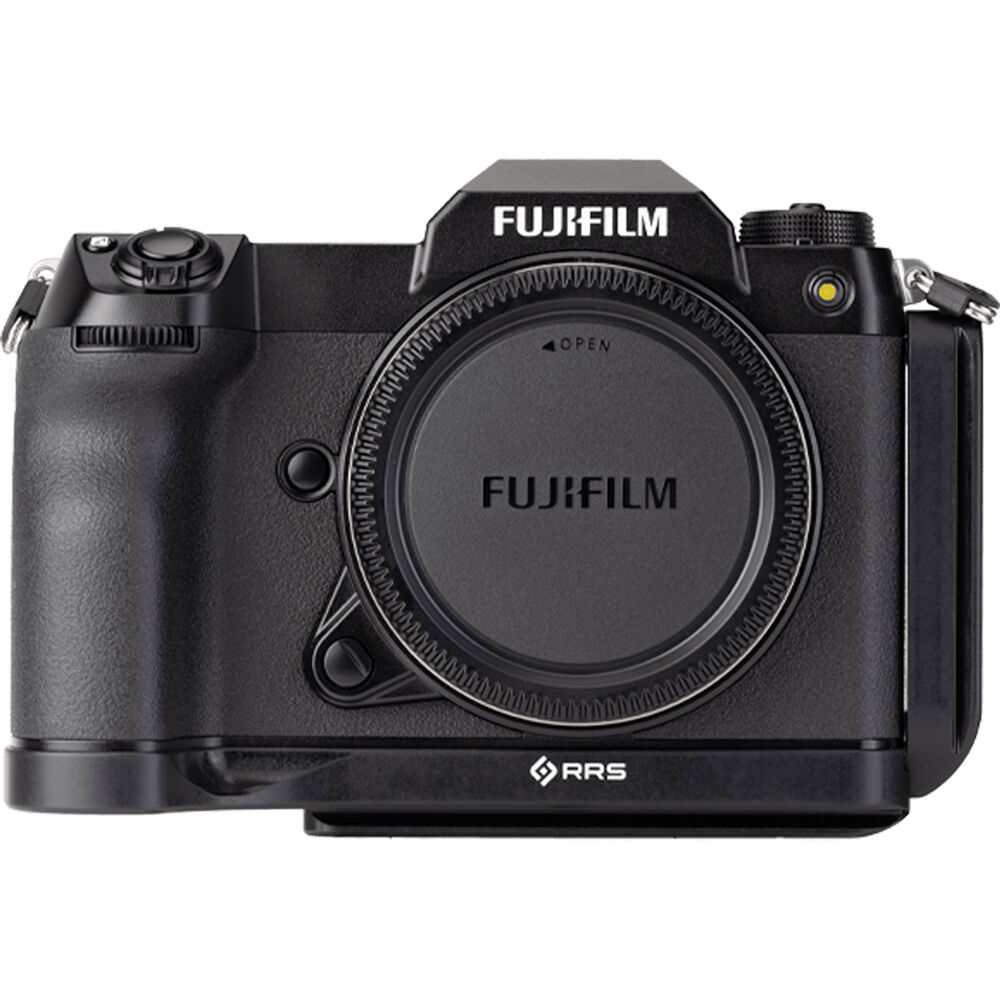
The Last Word – Smallrig GFX 100S L-bracket

The bracket provides a useful place to put your little finger, improving the grip.

Viewed from the back, the bracket provides both portrait and landscape orientation center line markings, and they appear to be accurate.

In the past, the Smallrig brackets have not used the RRS dovetail spec, making the use of RRS cam-clamps dangerous. This bracket fits perfectly in those clamps.

The Last Word – Fujifilm G lenses hotspotting at 720 nm

OK means no hotspotting, or very little. H means hotspotting that I consider to be unacceptable. I threw the Coastal Optical 60 mm f/4 UV-VIS-IR into the mix. All lenses were tested with subjects tens of meters away. The second row is the f-stop.

The Last Word – Shutter shock in the GFX 100s

ES wins. Why? It could be that it’s better in isolation, or it could be that the 2 seconds between shots wasn’t enough time for the vibrations to die down. I ran another test with 10 seconds between shots.

The Last Word – Three dimensionality and sensor format

I do get some sense of depth in all of the images. I get more at around 4K resolution than I do with the above web-downsampled ones. I see very little depth differences between the two formats.

The Last Word – GFX 100S sensor is a 4-shot stitch

If you aren’t doing stacked astro, I don’t think this is of any concern.

The Last Word – Relative sensitivity of Sony a7RIV and GFX 100S

The red channel of the GFX appears to be substantially more sensitive than the a7RIV. With the blue channel, it’s the other way around, although not ot such a  great degree. The green channels are about the same, with the Fuji being a bit more sensitive.

The Last Word – Sheen and specular surfaces with Fuji pixel shift on the GFX 100

This is not the kind of subject for which pixel shift offers much improvement, aside from the noise reduction due to averaging.

The Last Word – Fujifilm Pixel Shift Combiner Accurate Color mode

I used a sinusoidal Siemens Star; it’s not supposed to be sharp. There is virtually no aliasing in the 400 MP image, and a fair amount in the 100 MP open.  This is about what you’d expect comparing a 4-shot pixel shift image to a 16-shot one.

The Last Word – Two ways to make 100 MP pixel-shifted images with the GFX 100S

A reader asked if you got better quality 100 MP images by using Fujifilm Pixel Shift Combiner in Accurate Color mode or by using High Resolution Plus Accurate Color mode and downsampling in post. This post attempts to answer that question, using a number of Photoshop standard resampling methods, and GigaPixel AI as well.

The Last Word – An important GFX 100S accessory

I said a few choice words, and felt stupid. I sat down at my computer and ordered a Hoodman H32MB Hoodloupe. It came yesterday.

The Last Word – Using the Fuji 250/4 and 1.4TC on the GFX 100S vs FF alternatives

You can see the aliasing quite distinctly. The Nikon zoom needs a finer-pitch sensor. Remember, this is a sinusoidal Siemens Star, so the edges aren’t supposed to be crisp. Also, this was with zero sharpening.

My take is that, especially for birds, for which aliasing is often an issue, the 250/4 and the 1.4X TC isn’t a bad choice. It’s not as sharp as a decent medium-high res full frame MILC with a really good zoom, though.

The Last Word – Fuji 23/4, 30/3.5 field curvature and corner sharpness on GFX 100S

Now the 30 looks a hair better.

Both of these lenses will do a fine job for aerials or distant landscapes.

The Last Word – Zeiss 15/2.8 Distagon, Metabones 1.26x on GFX 100S

Still not winning any prizes.

Well, it was worth a try.

The Last Word – Which is sharper on-axis, the Fuji 23/4 or 30/3.5?

No significant change.

I am beginning to raise my opinion of the 30 mm lens, and I already thought it was quite good.

The Last Word – How much sharpness do you lose with the 1.4x TC on the Fuji 250/4?

In all cases, chromatic aberration is quite low.

Fujifilm GFX News, Rumors, and Collaboration
Fujifilm GFX Owners Group

Follow Fujiaddict on Facebook, TwitterInstagram, and YouTube

Fujifilm GFX100S: B&H Photo / Amazon / Moment / Adorama
Fujifilm GFX100: B&H Photo / Amazon / Adorama
Fujifilm GFX50R: B&H Photo / Amazon / Adorama
Fujifilm GFX 50S: B&H Photo / Amazon / Adorama

Fujinon GF80mm f/1.7: B&H Photo / Amazon / Moment / Adorama
Fujinon GF30mm f/3.5 R WR: B&H Photo / Amazon / Adorama
Fujinon GF 23mm f/4 R LM WR: B&H Photo  / Amazon / Adorama
Fujinon GF 250mm f/4: B&H Photo / Amazon / Adorama
Fujinon GF 1.4x Teleconverter: B&H Photo / Amazon / Adorama

Posted in Fujifilm GFX, Fujifilm GFX 100, Fujifilm GFX 100 Megapixel, Fujifilm GFX 100S, Fujifilm GFX 50R, Fujifilm GFX 50S, Fujifilm GFX100 IR| Tagged , , , , , , , , , , , , , , , , , , , , , , , , , , , , , , , , , , , , , , , , , , , , , , , , , , , , , , , , , , , , , , , , , , , , , , , , , , , , , , , , , , , , , , , , , , , , , , , , , , , , , , , , , , , , , , , , , , , , , , , , , , , , , , , , , , , , , , , , , , , , , , , , , , , , , , , , , , , , , , , , , , , , , , , , , , , , , , , , , , , , , , | Leave a comment

Fringer NF-FX (FR-FTX1) Won DGP2021 Summer Gold Prize!


We are glad to announce that Fringer NF-FX (FR-FTX1) adapter (for adapting Nikon F mount lenses to Fujifilm X cameras) has won the Gold Prize in the lens accessories category at the Digital Camera Grand-Prix 2021 Summer, Japan.

About the Digital Camera Grand-PrixThe Digital Camera Grand-Prix is a consumer-oriented awards ceremony for all manner of digital imaging-related solutions. Winners are selected by a panel of photographers, critics and distribution-related professionals with a view to choosing optimal products with which users can also enjoy photographers and photography, and not merely the taking of photographs. Full details of results and award-winning products are distributed at retail outlets, etc. in the form of a free magazine entitled Digital Camera Grand-Prix Award-winning Product Shopping Guide. Now the Fringer NF-FX is available in our webstore as well as in B&H, Adorama, Amazon, and other retail platforms.

Fringer NF-FX (FR-FTX1): Amazon

Please don’t forget to follow us on FacebookTwitterInstagramYouTube

Plus our owners’ groups
Fujifilm GFX Owners Group
Fujifilm X-H Owners Group
Fujifilm X-T Owners Group
Fujifilm X-S Owners Group
Fujifilm X-Pro Owners Group
Fujifilm X-E Owners Group
Fujifilm X-A Owners Group
Fujifilm X100 Owners Group

Posted in 3rd Party Lens, Accessories| Tagged , , | Leave a comment

Laowa Argus CF 33mm f/0.95 Coming May 3rd

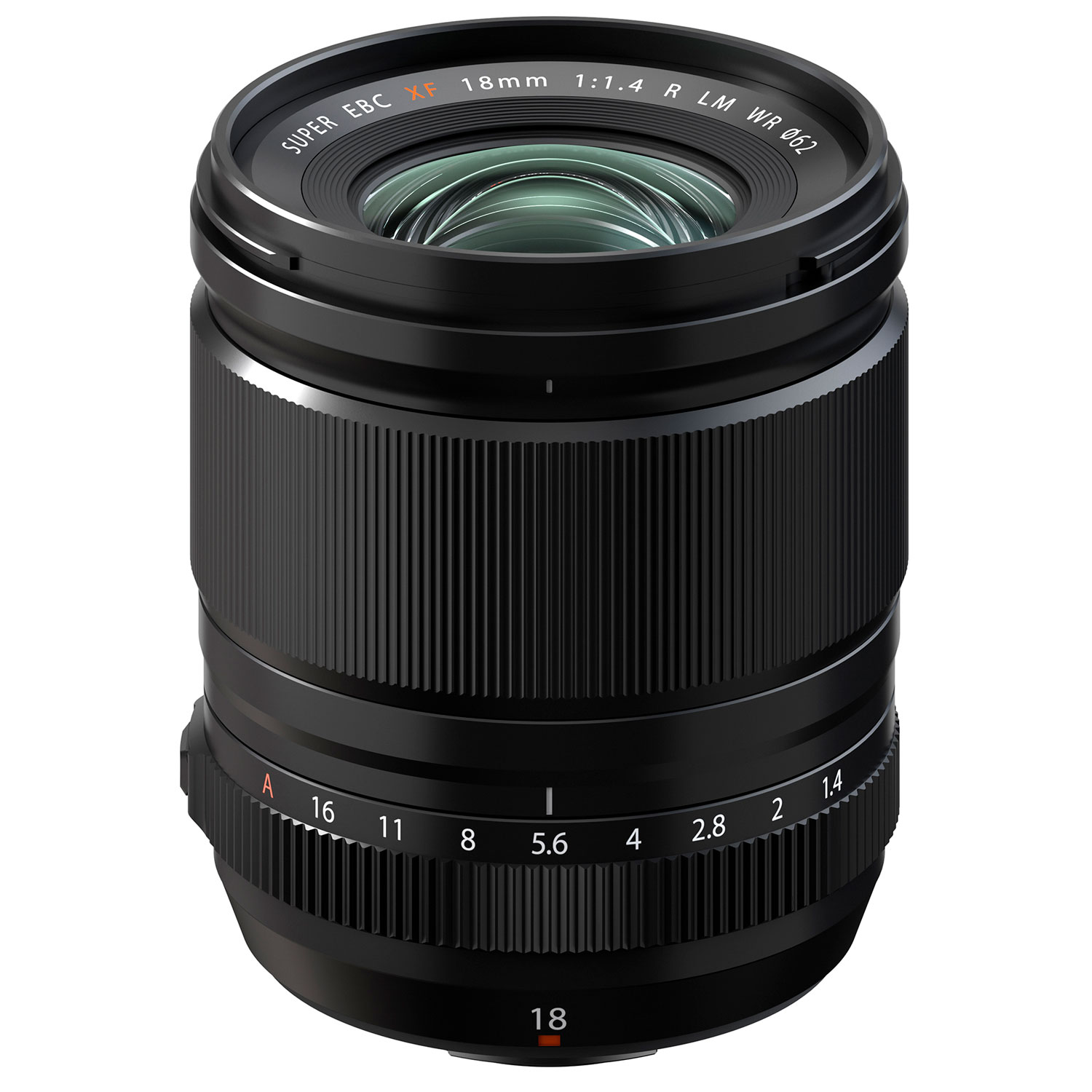
The Laowa Argus CF 33mm f/0.95 will be coming May 3rd for X-mount from Venus Optics Laowa after following the product lines development for over a year.

  • Focal length: 33mm
  • Format: APS-C
  • Aperture range: f/0.95 – f/16
  • Viewing angle: 46.2°
  • Optical design: 14 elements in 9 groups, including 1 aspherical, 1 ED, and 3 high refractive elements
  • Aperture: 9 blades
  • Minimum focusing distance: 35 cm
  • Maximum magnification: 0.125x
  • Filter thread diameter: 62 mm
  • Size: 71.5 x 83mm
  • Weight: 590g
  • Mounts: Sony E, Fujifilm X, Nikon Z, Canon EF-M
  • Price: RMB 3,500 (approx. $530).

Please don’t forget to follow us on FacebookTwitterInstagramYouTube

Plus our owners’ groups
Fujifilm GFX Owners Group
Fujifilm X-H Owners Group
Fujifilm X-T Owners Group
Fujifilm X-S Owners Group
Fujifilm X-Pro Owners Group
Fujifilm X-E Owners Group
Fujifilm X-A Owners Group
Fujifilm X100 Owners Group
Posted in 3rd Party Lens| Tagged , , , , , , | Leave a comment

Introducing the Reinforced Gitzo Ball Head Series 4


Gitzo just released new reinforced tripods that would pair well with the Fujifilm GFX you can read more about the changes on Explora.

  • The standout feature of this tripod head has to be the impressive weight capacity of 66 lb. This should easily accommodate even the heaviest DSLR/mirrorless and super-tele lens combinations, making it a perfect choice for wildlife, birding, and nature shooting, especially when a gimbal head is too unwieldy or doesn’t offer the desired range of movement.
  • Despite accommodating up to 66 lb, the tripod head itself weighs just about 2 lb. Its relatively light weight and compact form factor pair perfectly with select Systematic tripods to create a portable but highly stable support system. In fact, the Series 4 head with a lever lock will be available in a kit with your choice of Series 3Series 4, or Series 5 Systematic Carbon Fiber Tripod Legs.
  • It features an Arca-type compatible quick-release plate, of course, and is available with either traditional screw knob or fast-action lever locking mechanisms.
  • As you would expect from Gitzo, the ball itself has been designed for smooth and reliable use, even under heavy loads. The aluminum ball is a smooth-coated hollow sphere and is rated to perform in a wide temperature range from -22°F to 158°F.
  • A dedicated thermo-stable fluid panning cartridge ensures super-smooth horizontal panning motions for tracking laterally moving subjects or just for seamless panoramic stitching movements.
  • For intuitive and responsive handling, the ball head features an independent friction control wheel and a fast lock knob for quickly freeing the head to track subjects at a moment’s notice.
  • There’s also an independent panning lock and an integrated bubble level to further suit making accurate compositions.

Gitzo Systematic Series 5 Carbon Fiber Tripod with Arca-Type Series 4 Center Ball Head with Lever Release
B&H Photo / Adorama

Gitzo Systematic Series 4 Carbon Fiber Tripod with Arca-Type Series 4 Center Ball Head with Lever Release
B&H Photo / Adorama

Gitzo Systematic Series 3 Carbon Fiber Tripod with Arca-Type Series 4 Center Ball Head with Lever Release
B&H Photo / Adorama

Gitzo GIGH4383LR Series 4 Center Ball Head with Arca-Type Lever Release QR Receiver”
B&H Photo / Adorama

Gitzo GIGH4383QD Series 4 Center Ball Head with Arca-Type Screw Knob QR Receiver
B&H Photo / Adorama

Posted in Accessories| Tagged , | Leave a comment

Atomos Ninja V H.265 Recording Coming in May and New Atomos Ninja V+ 8k Model Announced


Atomos NINJA V: B&H Photo / Amazon / Adorama
Atomos NINJA V+: B&H Photo / Amazon / Adorama

Welcoming new members to the Atomos Ninja Family
Melbourne, Australia – 28th April 2021 – Atomos is thrilled to announce that it is expanding the Ninja family, with two exciting new Ninja products and a major update for Ninja V!

Ninja V receives the option for H.265 codec upgrade, Ninja V+ – is built for Apple ProRes RAW 8K productions, and Ninja Stream – 4Kp60 HDR for a high-quality social distancing production environment.

The Ninja V receives H.265 (HEVC)
The original Ninja V, launched in 2018, remains the most popular Atomos product and receives the ability to add the H.265 (HEVC) codec. The 5” 1000nit 10-stop HDR-monitor allows users to accurately monitor and record from either HDMI or SDI. Atomos continues to expand Apple ProRes RAW support on all partner cameras over HDMI and SDI. The Ninja V will continue to receive updates for cameras and additional functionality via AtomX modules whilst remaining at the price of $595.

The popular Ninja V is the workhorse and creative tool of choice for the wider film and pro-video industries and will now benefit from the addition of H.265 workflows, with up to 4Kp60 10-bit 4:2:2 full ‘i’ frame with options for 8-bit at various data rates. Atomos will be adding these features through a simple one-click $99 upgrade from my.atomos.com in May 2021.

Welcoming the Ninja V+
Atomos is excited to reveal the new Ninja V+ and Ninja V+ Pro Kit, building on the foundation of the Ninja V, coming to you in May 2021. The Ninja V+ delivers high quality accurate monitoring and extended recording capabilities for your camera of choice. Delivering support for continuous recording of 8Kp30 and 4Kp120 in Apple ProRes RAW adding to the great workflow of Ninja V, that bring together the great partnerships with camera manufactures and the world’s leading editing systems for our customers.

Included in the codec arsenal is the ability to record video inputs using the10-bit H.265 (HEVC) codec for high quality compressed recordings with small file sizes, which is perfect for the world we now live in, where streaming and sharing online has dramatically increased.

Ninja V+, sports a new stealth grey bezel and expands the processing power to deliver for 8k and high-frame-rate RAW recording. Using the latest chip technology, this premium Ninja has plenty of grunt to be able to record ProRes RAW at even higher frame rates and higher resolutions than the Ninja V. The extra horsepower under the hood allows the platform to add other ‘plus’ features when combined with future Atomos products and upcoming AtomX modules. The efficiency of ProRes RAW opens the possibility for creativity with the increase in resolution or frame rate whilst maintaining a workflow that can seamlessly slide on to the timeline of your existing ProRes RAW projects. Read More »

Posted in Accessories| Tagged , , | Leave a comment

Fujinon XF70-300mm In Stock


Amazon has a few XF70-300mm lenses if you have been trying to find one in stock. I love mine and have gotten a lot of great shots from it so far so don’t miss out.

Follow Fujiaddict on Facebook, TwitterInstagram, and YouTube

Plus our owners’ groups
Fujifilm GFX Owners Group
Fujifilm X-H Owners Group
Fujifilm X-T Owners Group
Fujifilm X-S Owners Group
Fujifilm X-Pro Owners Group
Fujifilm X-E Owners Group
Fujifilm X-A Owners Group
Fujifilm X100 Owners Group
Posted in Fuji lenses| Tagged , | Leave a comment