Fujifilm GFX 50S vs Hasselblad H5X, Street Photography and Technology

The Fujifilm GFX has technical photographers and photographers alike rethinking photography. Before the announcement of the GFX medium format was held in high regard/esteem by many, even if they hadn’t used the format before. Yet after the announcement and launch there has been a large back lash with many trying to prove that full frame is good enough or better.

Frankly m4/3 and 1-inch sensors are good enough for most and I think a lot of the turmoil we are experiencing today is from full frame users bashing APS-C/m43/1-inch etc… by focusing on the size of the sensor instead of understanding and analyzing the technology infused in the system. For instance BSI in the next GFX will lead to a huge jump in image quality and it’s the only reason the Sony a7R II is worth owning over other full frame solutions in my opinion. Take the time to understand the technology and you will better appreciate the GFX format Fujifilm has created for photographers.

Lens Protogo – Fujifilm GFX-50S w/GF 120mm f/4 Macro vs Hasselblad H5X w/Leaf Credo 60

“In conclusion, this new Fuji will certainly open the medium format door for some photographers who couldn’t quite stomach the typical price range of medium format digital backs–and in addition there are some really fun aspects that the Fuji brings to the table. The low light functionality, it’s smaller and lighter form factor, and the ability to share images socially while on the job are some of my favorite perks. If this came at a huge deficit image wise I might look past it, but it was able to stand up for itself in detail/color/quality.”

The Last Word – Fuji GFX read noise vs shutter speed

Keenan Rivals – First Impressions For Street Photograph

GFX Technologies #7 – The Development of the Ultimate Finder

“It has the world’s highest viewfinder magnification ratio of 0.85x…To compensate the higher reliance on the optical parts, they proposed a lens construction of 5 elements in 5 groups (all glass and including 2 aspherical elements), which is unheard of for a finder, in terms of both cost and size.

Previous GFX Technologies
GFX Technologies #6 – Color Chrome Effect: Both a Goal, and a Beginning

“The development of Color Chrome Effect is derived from a reversal film: fortia. The film was introduced to the market in 2004 with the catchphrase “Higher contrast and more vivid color than Velvia”. It was a limited run, so although many talked about it, only few have had a chance to try it out… Even the X-Processor Pro needs about 1.0 sec. to process the Color Chrome Effect. If you are single shot user, then this is not a problem…We asked the image designer who created the Color Chrome Effect whether he could replicate the Color Chrome Effect by using image processing software. His answer was “yes, but it would take me an hour for each image. I also need to know the sensor characteristics of each image.””

Read More »

Posted in Fujifilm GFX, Fujifilm GFX 50S| Tagged , , , , , , , , , , , , , , , , , , , | Leave a comment

Gordon Laing Fujifilm X-T20 Mega Review

Gordon Laing is back with another mega video review clocking in at over an hour. If you’re not a fan of written reviews his conversational style video reviews are some of the best out there. If an hour is too much time for you to dedicate to a video review than Max Yuryev pretty much sums up all the things there are to love about the Fujifilm X-T20 in around 15-minutes.

Fujifilm X-T20: B&H Photo / Amazon / Adorama

Posted in Fujifilm X-T20| Tagged , , , , | Leave a comment

Fujifilm GFX 50S Roundup


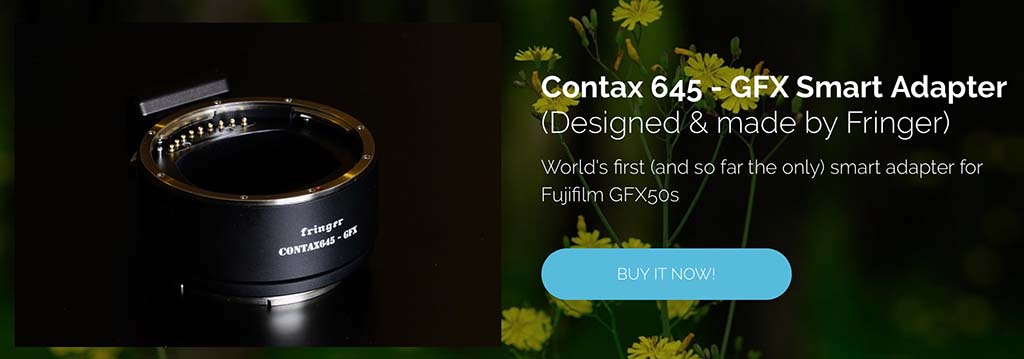
Most of the initial camera reviews have wrapped up, so now reviewers are turning to increasingly niche topics in order to full explore the GFX system. I think in the coming weeks long and wide adapted glass will become of keen interest to many as they look to round out their GFX kit.

Photography Blog – Fujinon GF 63mm f2.8 R WR Review “The GF 63mm f2.8 R WR continues the Fujifilm tradiition of offering a standard lens that is clearly a cut above the norm. This is probably the lens that most new GFX users will start off with, and it’s also one that they will probably keep as long as they own the camera.”

Imaging-Resource – Fuji GFX Field Test “Despite being a first-generation product, the design seems very refined.”

The Last Word – Is the GFX an all-rounder?

The Last Word – Fujifilm GFX read noise and EDR

The Last Word – Making lemonade from the GFX slow electronic shutter

Prophotonut – Jenny Fisher in Spain – Samples

Ryo-Tokyo – Samples

GFX Canadian Journal – Day 5

GFX Canadian Journal – Day 6

GFX Canadian Journal – Day 7

Gear Open – Review “It might not look or feel quite as good as the Hasselblad X1D, but it outguns its principal rival in every other aspect.”

Le Monde De La Photo – TEST FUJINON GFX 50S: COMPLEMENTARY MEASUREMENTS OF THE OPTICAL TRIO “The dive is generally excellent considering the level of requirement of a 50 Mpxl sensor, vignetting and distortion are very well contained, only the distortion measured on the 120 mm may require a small correction in post-processing.”

Join our Fujifilm GFX Owners Group and join in the discussion, also follow the Fujifilm GFX Page to get more tailored news on Facebook and join Fujiaddict on Facebook and Twitter.

Fujifilm GFX 50S: B&H Photo / Amazon / Adorama

Posted in Fujifilm GFX, Fujifilm GFX 50S| Tagged , , , , , , , , , , , , , | Leave a comment

Innovative Lens Cap For The Fujinon XF 23 mm F 2 R WR and XF 35 mm F 2 R WR


Translated Release:
Oriental Hobby Co., Ltd. added 43 mm as a new size of Freemod’s lens cap “Freemod X-CAP 2” and “Freemod X-CAP 2 F UV filter integrated type”, and began selling on April 5. The color is black and two colors of silver.

This product is a general-purpose lens cap to be installed on the filter thread frame. The aluminum curtain opens by pulling out the tip part of the attached lens cap, which is characterized by the structure that it closes when it returns.

Freemod X-CAP 2 F UV filter integral type is a product in which UV filter manufactured by Taiwan STC company is incorporated inside. It is a superior model added UV protection effect and protection effect to prevent dust and dirt.

The existing lineup is 5 sizes of 37 mm, 40.5 mm, 46 mm, 49 mm, 52 mm.

The external dimensions of Freemod X-CAP 2 are 55.5 × 7.8 mm (5.6 mm after installation). Weight is 14 g.

The suggested retail price is 6,458 yen including tax.

Freemod X – CAP 2 F UV filter integral type external dimensions are 55.5 x 7.8 mm (5.6 mm after installation). Weight is 16 g.

The recommended retail price is 8,618 yen including tax.

The 43 mm conformance confirmed lenses released in Japan are as follows (as of April 2017).

  • Canon EF – M 22 mm F 2 STM
  • FUJIFILM XF 23 mm F 2 R WR
  • FUJIFILM XF 35 mm F 2 R WR

Via DC.Watch

Posted in Accessories, Fuji lenses| Tagged , , , , , , , , , | 3 Comments

Capture One Pro Beta 10.1 Updated X-Trans Support and Compressed RAW


Capture Pro Beta 10.1 re-designs X-Trans Support and adds compressed RAW support!

“Capture One Pro 10.1 beta just released adds some interesting new features fir Fuji X RAW processing:

X-trans Support: Re-design

Fuji Cameras with X-trans type sensors can now leverage the LCC, Chromatic Aberration Analysis and Purple Fringing suppression tools for your work ow. X-trans les are now also supported via OpenCL.

Fuji Compressed Format

Capture One 10.1 supports the Fuji Compressed RAW format

Regards,
Bud James”

Via Fujix-Forum

Posted in Software| Tagged , , , , , | 1 Comment

Nikkor on Fujifilm GFX 50S


The FotodioX Nikon F to Fuji G-mount adapter for the Fujifilm GFX has been incredibly popular lately as Nikon users give the Fujifilm GFX 50S a try and for good reason a lot of Nikon’s lenses cover a large portion of the GFX’s sensor. The other day I came across a review of the FotodioX adapter at Photographylife.com and while it was comprehensive it was a little light on images, so I reached out to our Fujifilm GFX Owners group and Chris Mielke was kind enough to help by sending me a bunch of test photos showing exactly how the FotodioX adapter performs with the following lenses

Chris shot these test shots for himself, but once again he was kind enough to share them with the community so be sure to check out his work on Flickr or Smugmug. He also has a less frequently updated website at www.mielkephoto.com. In Chris’ words:

“I had a rainy overcast cloudy day and my adapter from Fotodiox arrived so I thought I would shoot all of the Nikon FF lenses I had against the grey sky to see which vignetted and whether that vignette was usable on the GFX. I basically racked the camera to infinity and took photos wide open and then two stops down to see how it improved.  I had to convert to a DNG and Edit the EXIF to a Phase One camera so I could use my chosen converter Capture Pro 10.  I then adjusted for white balance and converted to jpg. I did something a little different for the 70-300.  I took photos at 70, 135 and 300 with the same conditions.”


Hopefully test photos like these help you decided if the FotodioX Nikon F to Fuji G-mount adapter is right for you. I am trying to secure some Kipon adapters in the near future for testing, but until then our owners group is a great place to ask for help. Also check out the review by Photographylife.com because it has some descriptive analysis of lenses not featured here.

Join our Fujifilm GFX Owners Group and join in the discussion, also follow the Fujifilm GFX Page to get more tailored news on Facebook and join Fujiaddict on Facebook and Twitter.

Fujifilm GFX 50S: B&H Photo / Amazon / Adorama


Posted in 3rd Party Lens, Fujifilm GFX, Fujifilm GFX 50S| Tagged , , , , , , , , , , , , , , , , , , , , , , | 1 Comment