


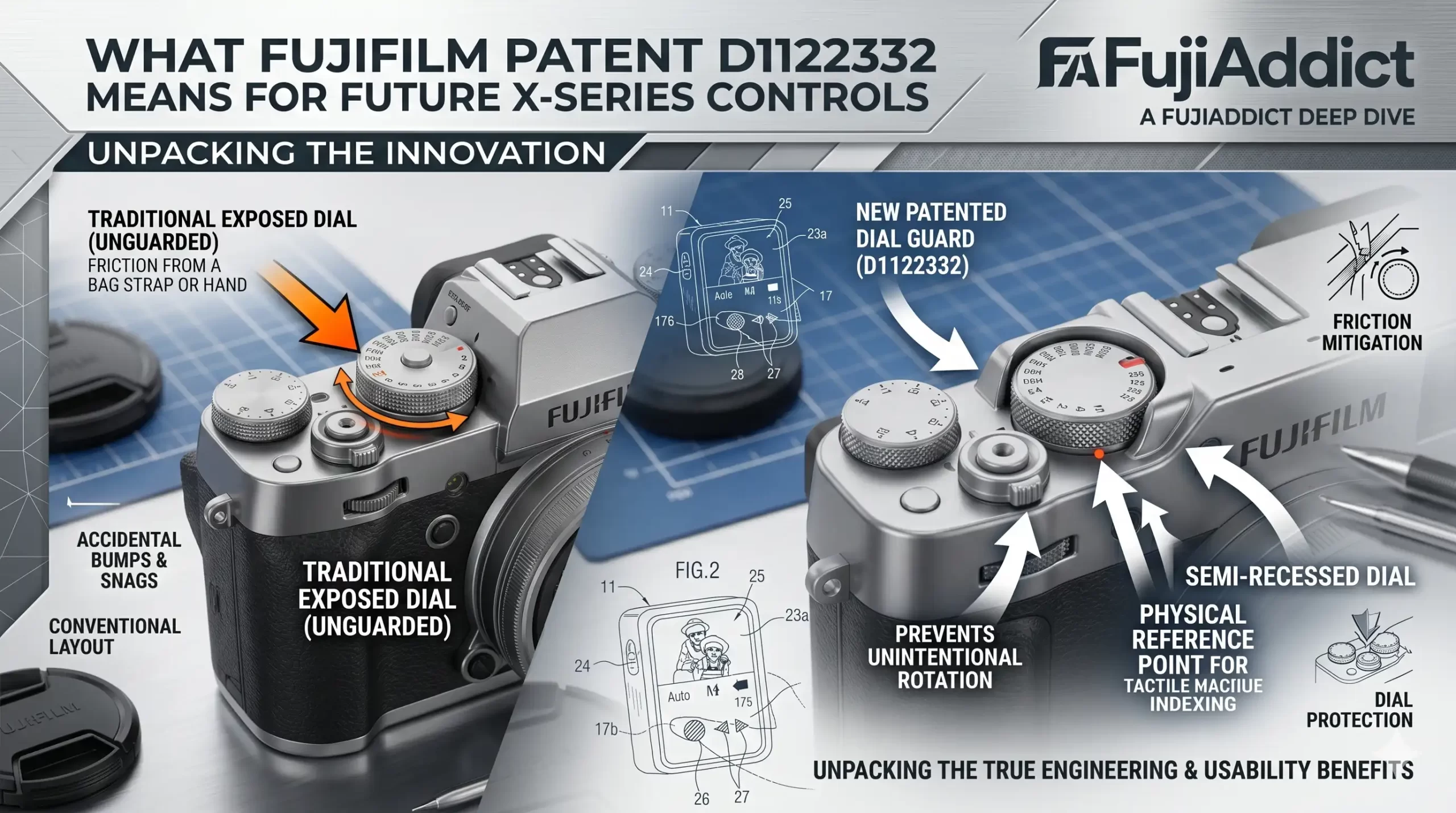
Fujifilm has a new design patent D1122332. Let’s break this down from a pure engineering and usability standpoint. No PR spin, just the mechanical strategy behind the filing.
The Engineering Reality of D1122332: Solving the “Physical Dial Problem”
To understand what Fujifilm is doing here, we have to ignore the general shape of the camera in the drawings and focus strictly on the solid lines.
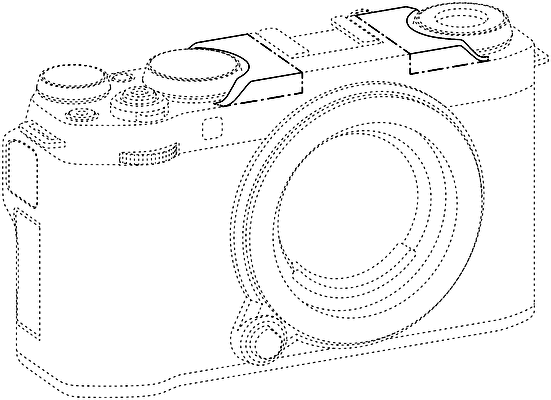
Exactly What is Protected: Fujifilm is patenting a “cowling” or “shoulder” system for the top plate. Instead of the top dials sitting fully exposed on a flat deck (like on an X-T5 or X100VI), the camera’s chassis rises up around the dials. The dials are essentially semi-recessed into these raised structural blocks that flank the central hot shoe area.
How This Benefits Future Fujifilm Bodies: Fujifilm’s biggest market advantage is its tactile, physical exposure dials. However, from a practical operating standpoint, exposed dials have a major mechanical flaw: they get bumped easily.
By implementing this guarded design, Fujifilm achieves three distinct engineering and usability benefits:
Friction Mitigation (Anti-Snag): This is the primary operational benefit. When carrying a camera on a rapid sling strap or pulling it in and out of a tightly packed gear bag, friction frequently causes the exposure compensation or shutter speed dials to rotate unintentionally. The raised shoulder design acts as a physical bumper. Lateral friction from clothing or bags hits the static housing rather than the rotating edge of the dial.
Sheer Force Protection: An exposed dial shaft is highly vulnerable to sheer force (lateral impact). By surrounding the lower half of the dial with a solid chassis wall, the structural integrity of the top plate absorbs impacts if the camera is bumped against a doorframe or dropped, protecting the delicate internal electronic contacts beneath the dial.
Tactile Indexing: Operators need to adjust settings blindly while looking through the EVF. A raised guard provides an immediate physical reference point for the thumb and index finger. This makes it easier to locate and manipulate the dial quickly without relying on muscle memory alone.
The Strategic Takeaway: This patent proves Fujifilm is actively engineering a way to keep their signature retro manual controls relevant for modern, rugged use. They are solving the physical vulnerabilities of traditional dials without having to abandon them for modern, flush command wheels. It bridges the gap between classic aesthetics and professional reliability.