


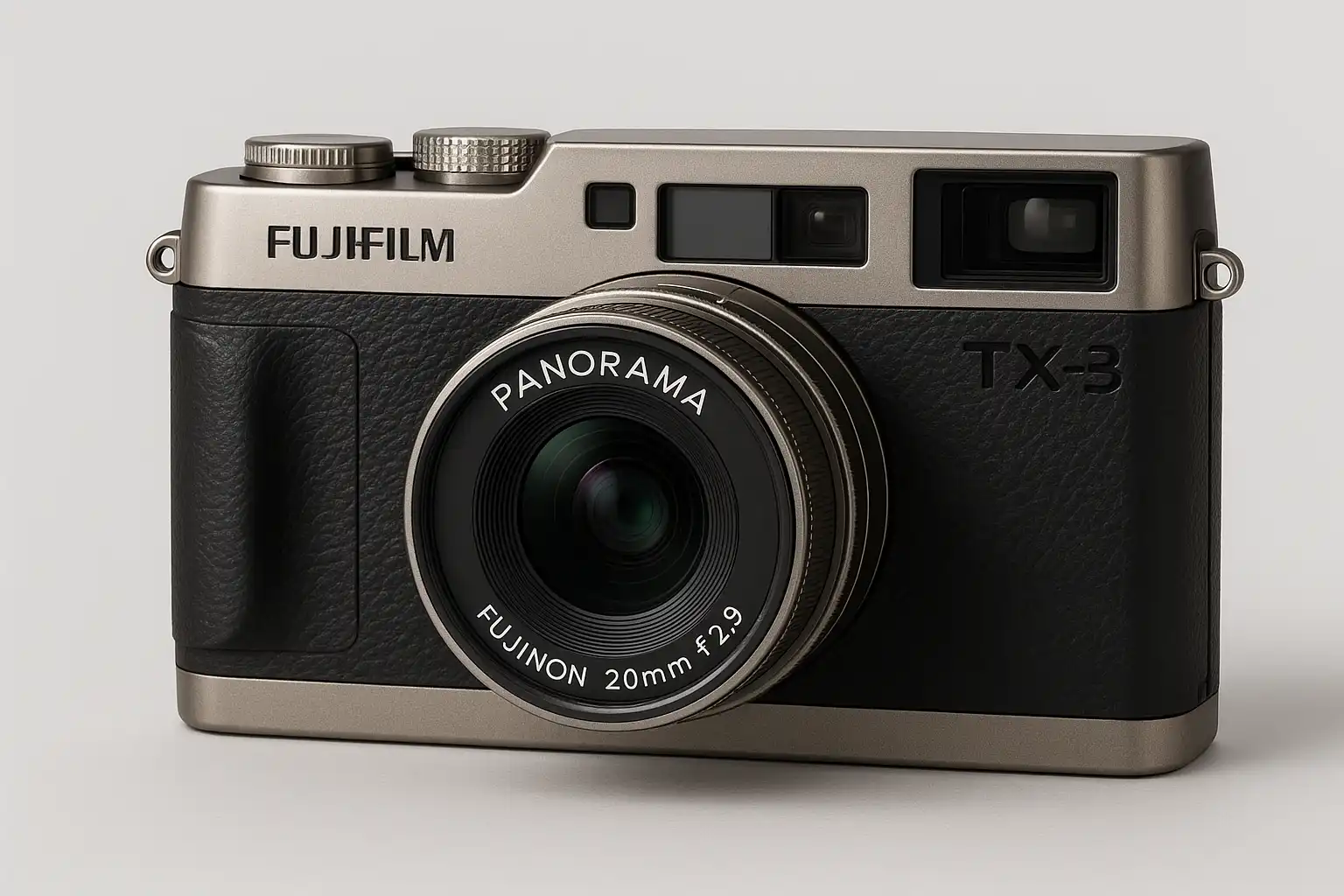
Full Frame fans have been pushing a narrative that Fujifilm is working on a full-frame camera, which is unlikely because Fujifilm has been clear about GFX being their full-frame offering. The better interpretation of these patents is that Fujifilm is working on the Fujifilm TX-3. Below is the best interpretation of the patents we have.
The Original TX-1: A 1998 Game-Changer
The titanium-clad Fujifilm TX-1 (sold elsewhere as the Hasselblad XPan) exposed a 65 × 24 mm negative across two 35 mm frames, delivering medium-format-style panoramas from a compact body. It launched with 45 mm f/4, 90 mm f/4 and (later) 30 mm f/5.6 lenses, all designed by Fujinon.
Photographers loved the format’s cinematic feel, but the camera was discontinued in 2006—leaving today’s shooters to simulate the look by cropping, stitching or buying a pricey, ageing film body.
Patents Hint at a 30-Year Anniversary “TX-3”

1 — A Purpose-Built 65 : 24 Sensor
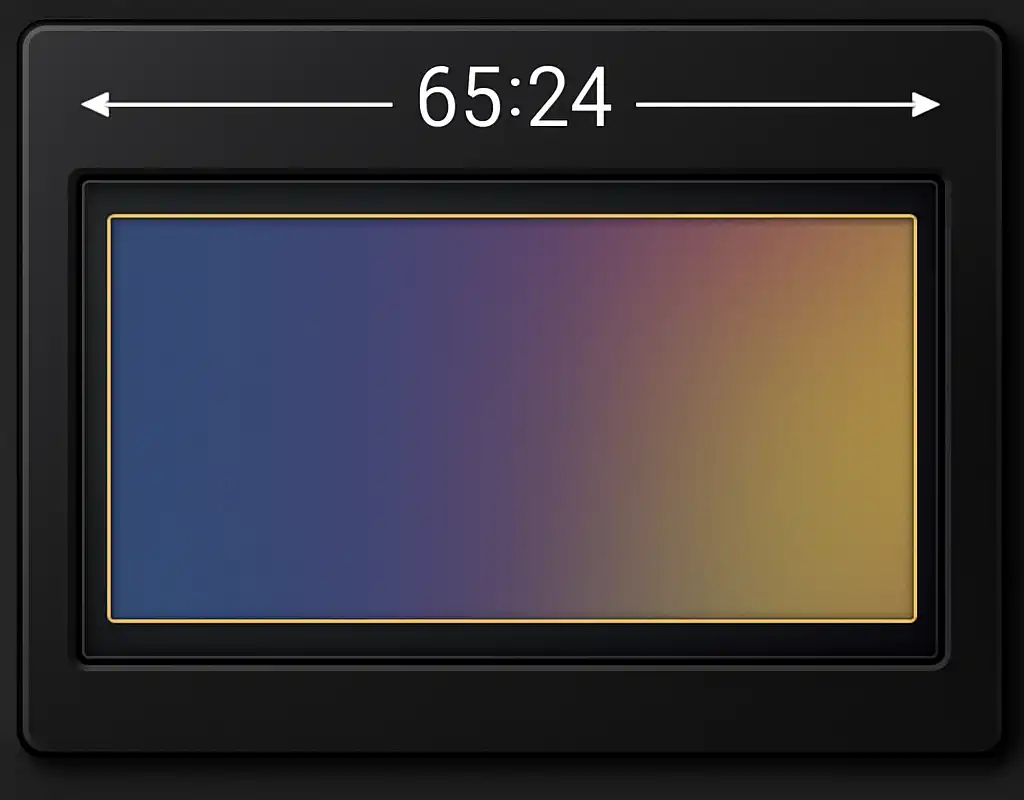
- WO 2025/141973 – “Image Capture Device” describes a 2.7 : 1 CMOS with dual horizontal read-out zones that mitigate rolling shutter on ultra-wide reads and keep pixel pitch constant across the frame. The drawing shows a 50 mm-diagonal active area—exactly what a 65 × 24 mm capture needs.
- The filing date (28 Feb 2024) lines up with a typical three-to-four-year lead time before commercial release—i.e., Fujifilm’s publicly-hinted 2028 milestone for a digital XPan successor.
(Sensor illustration in your image carousel visualises the aspect ratio and edge-to-edge read-out concept.)

2 — Short-Back-Focus Panoramic Lenses
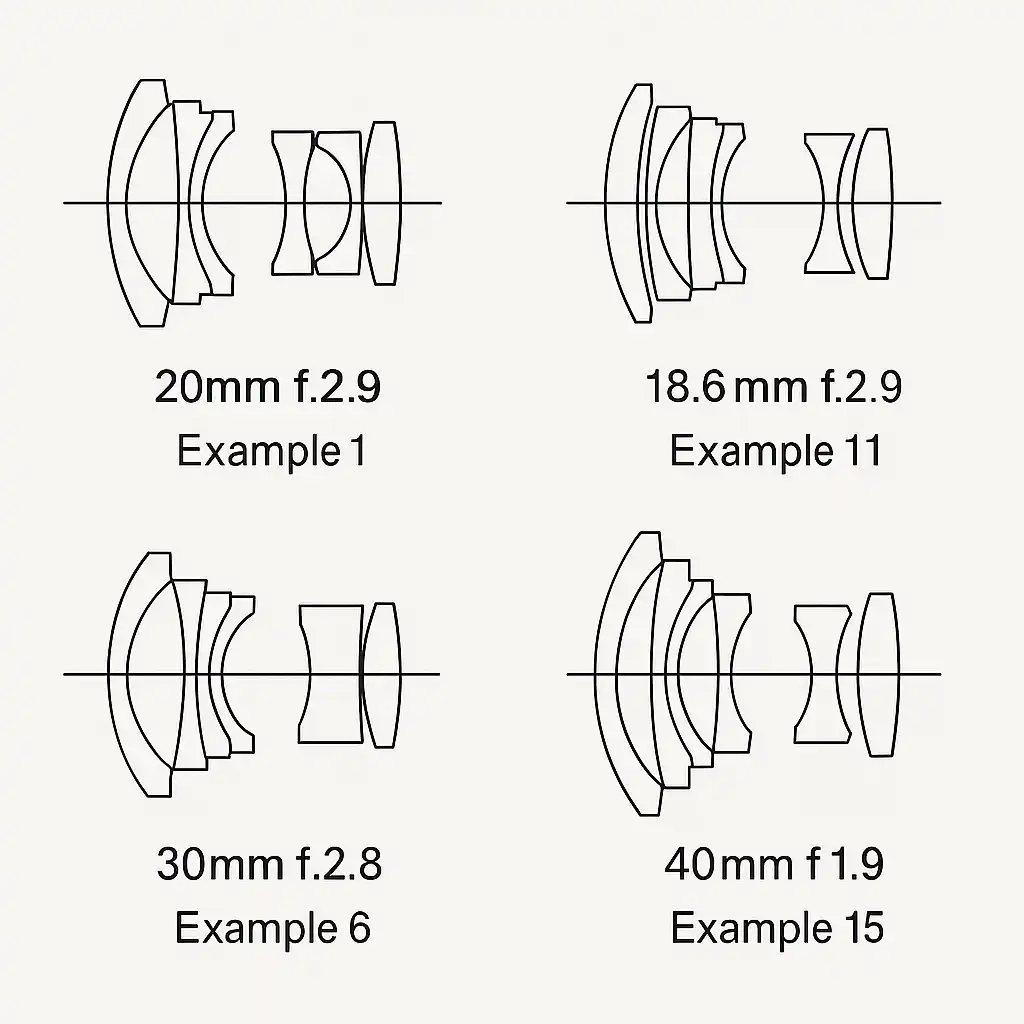
Japanese publication JP P2025086741 – “Imaging Lens and Imaging Device” contains 21 optical formulas; highlights include:
| Example | EFL (mm) | Max f-stop | FOV (° diag) | Back-focus (mm) | Notes |
|---|---|---|---|---|---|
| 1 | 20.7 | 2.9 | 100° | 11.5 | Covers 50 mm circle |
| 11 | 18.6 | 2.9 | 108° | 9.3 | Super-ultra-wide |
| 15 | 40.4 | 1.9 | 58° | 10.9 | Fast normal prime |
All share ~50 mm image-circle diameters—too small for Fujifilm’s 33 × 44 mm G-format but perfect for the 65 × 24 mm sensor above—and back-focus distances under 13 mm, hinting at a fixed-mount or very short flange.
(The optical block diagrams in your carousel condense four representative examples from the patent.)
3 — Why the Timing Matters
Fujifilm execs have teased a “special product” for the TX-1’s 30-year anniversary during X-Summit Q&As, and rumor sites repeatedly reference an internal roadmap targeting 2028. The sensor and lens patents were both filed in late 2023 and published in 2025, squarely on schedule for a 2028 launch window.
What a Digital TX-3 Could Look Like
| Spec / Feature | Likely Details | Rationale |
|---|---|---|
| Sensor | 65 × 24 mm, ~50 MP, stacked CMOS | Matches patent dimensions; stacked design implied by dual read-out strips. |
| Lens Mount | Fixed or very short-flange bayonet | <13 mm back-focus in patents. |
| Initial Lens Set | ≈ 21 mm f/2.8, 35–40 mm f/2, 70 mm f/2.8 | Digital analogues to original 30/45/90 mm film lenses, adjusted for crop factor. |
| Body | Titanium alloy shell, rangefinder-style OVF with digital overlay | Homage to TX-1 build; OVF aids panoramic framing. |
| Launch | X-Summit Spring 2026 (concept) → Retail 2028 | Consistent with Fujifilm’s GFX pre-launch cadence. |
Why It Matters to Photographers
- No more resolution sacrifice — a dedicated sensor keeps every pixel instead of discarding ~45 % of an X-T5 or GFX file when cropping to 65 : 24.
- Instant cinematic framing — composing in-camera forces stronger leading lines and negative space, impossible to visualise when you crop after.
- Fresh creative ecosystem — new optics and a unique body give Fujifilm another “halo” product alongside the X100 and GFX lines, attracting both collectors and working landscape/storytelling pros.
Bottom Line
All the building blocks for a digital TX-3 now sit in the public patent record: a bespoke panoramic sensor and matching ultra-wide glass. Given the TX-1 turns 30 in 2028—and Fujifilm’s affection for anniversary releases—expect the next four years to bring teasers, concept prototypes and, eventually, the first true digital XPan. When it lands, it could redefine panoramic storytelling for the mirrorless era.