Fujifilm X Lab 10 GFX100S: Nostalgic Negative, American New Color, Settings, and More

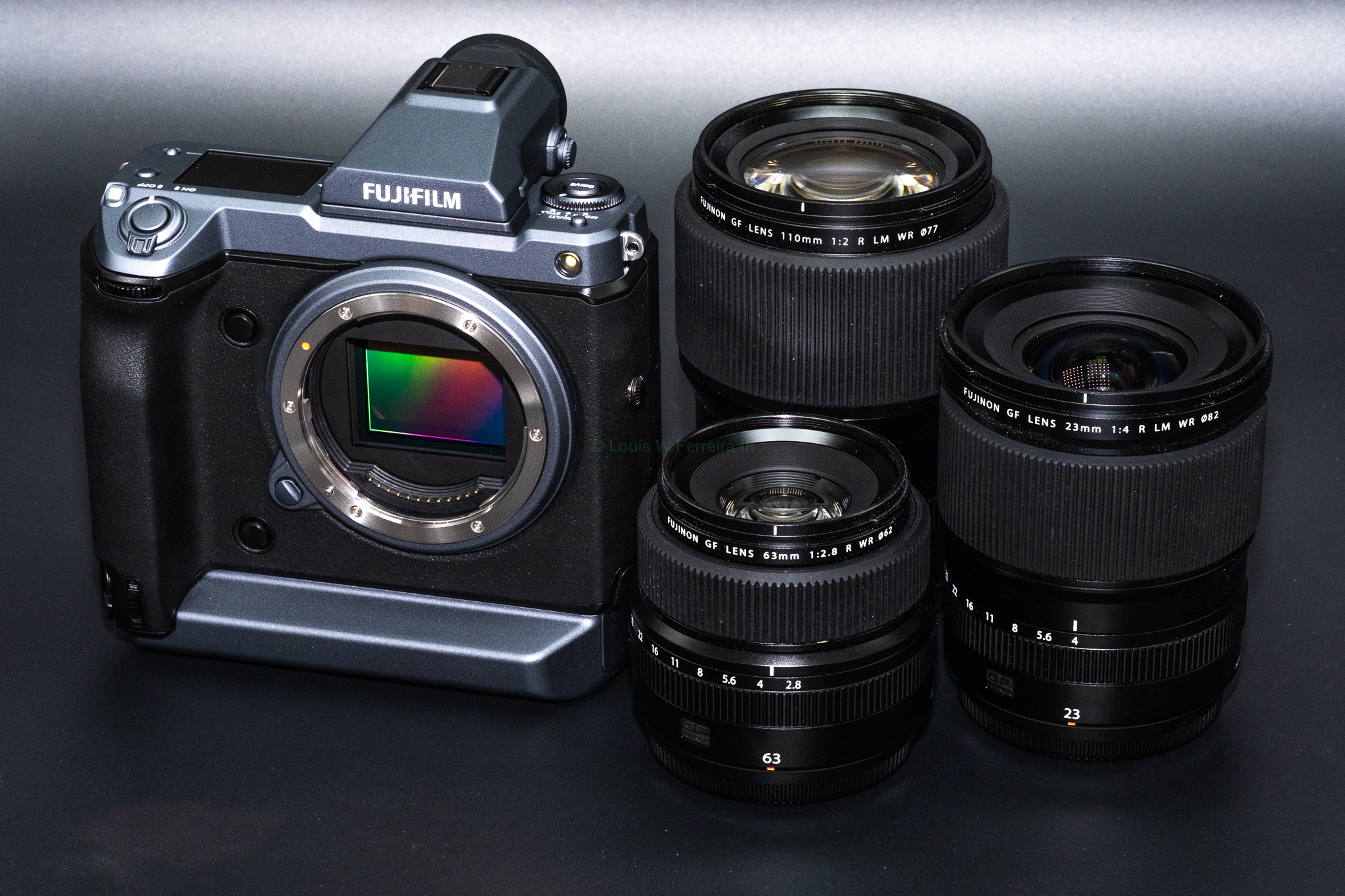
Fujifilm released X-Lab 10 about creating the Fujifilm GFX100S (Part 1 Here) and it goes into some detail about how they have made the GFX more compact. The video is in Japanese as usual with no subtitles so YouTubes auto subs and auto-translate are the only way for Engish speakers to access the information they are relaying. Below is a summary of that translation process.

  • Image quality is not just about resolution, but also about color reproduction, gradation reproduction, and dynamic range
  • Have wanted a nostalgic film simulation for 3 years now
  • They wanted to develop nostalgic negative for X-Pro3 but it needed the large GFX sensor because APS-C couldn’t produce the needed colors
  • Nostalgic negative is based on American New Color from the 1970’s
  • Matching the color of classic color photobooks of the 1970’s is hard because republications change the colors some so the classic look can be hard to get today since many factors change the look of color on the page including the technology used for printing at the time and the individual photographers’ style
  • There are two points they focus on 1 the dark parts, point 2 the amber parts of the image that are tied to white balance which can also be cool and works with auto white balance
  • Film simulations are often misunderstood even in promotions
  • Film simulation is designed to improve image quality, but white balance and ISO can impact the simulation
  • Film simulation is about image quality and shouldn’t be considered a color effect
  • Nostalgic negative is tuned for the best allrounder settings, but if you want to tweak it to get that classic American New Color look from the 70’s there are some adjustments you should make
    White Balance: R:+2/B:-3
    Tone Curve: Shadow -2
    Color: -2

Please don’t forget to follow us on FacebookTwitterInstagramYouTube

Plus our owners’ groups
Fujifilm GFX Owners Group

Fujifilm GFX100S: B&H Photo / Amazon / Moment / Adorama
Fujinon GF80mm f/1.7: B&H Photo / Amazon / Moment / Adorama

Fujifilm X-E4: B&H Photo / Amazon / Moment / Adorama
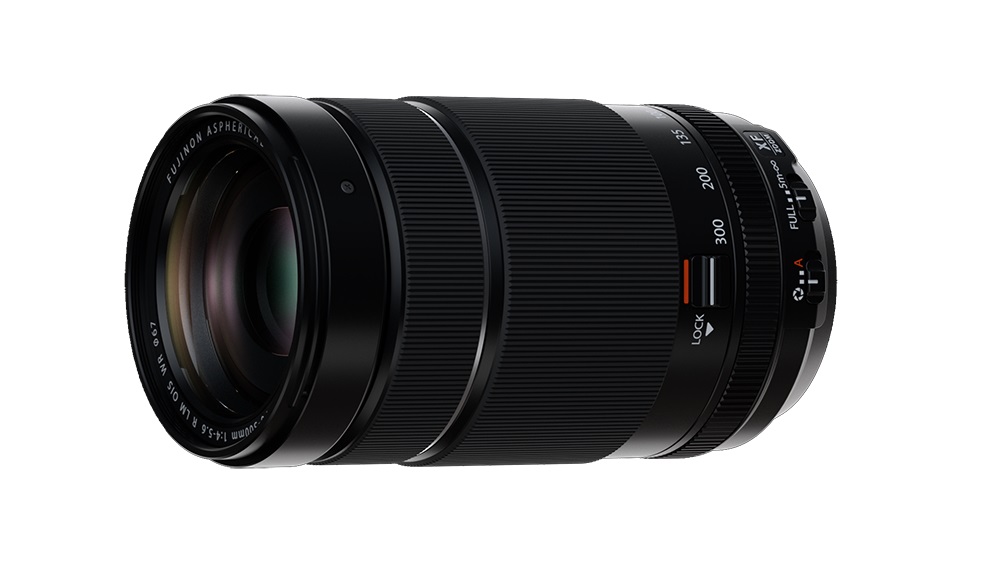
Fujinon XF70-300mm f/4-5.6: B&H Photo / Amazon / Moment / Adorama
Fujinon XF27mm f/2.8 II: B&H Photo / Amazon / Moment / Adorama

Posted in Fujifilm GFX, Fujifilm GFX 100, Fujifilm GFX 100 Megapixel, Fujifilm GFX 100S| Tagged , , , , , , , , , , , , , , , , , , , , , , , , , , , , , , , , , , , , , , , , , , , , , , , , , , , , , , , , , , , , , , , , , , , , , , , , , , , , , , , , , , , , , , , , , , , , , , , , , , , , , | Leave a comment

Fringer NF-FX Firmware 1.20 Released

The Fringer NF-FX released firmware update 1.20 today adding support for a lot of Nikon glass. The Fringer NF-FX is available from B&H Photo.

Download Here

The improvements include:

We keep working on testing and optimizing more lenses. According to users’ feedback, there are strong demands on AF-S 70-200/2.8G VR 1st generation, AF-S 500/5.6E PF ED VR and more. Now we have added them to the list.

2021/2/3

Version 1.20

  1. Added following lenses to the tested and optimized lens list:

AF-S 500/5.6E PF ED VR is the only one with this spec in the market that is so small and lightweight. It looks almost the same size as a 70-200/2.8. Don’t forget it’s a 500mm lens. Now it works very well on Fujifilm.

Although it’s very old, AF-S 70-200/2.8G VR 1 is very popular. Now we have added it to the list. It works very well on Fujifilm, too.

Please visit our website to download the new firmware and release notes. Follow the instructions in the release notes or user’s manual to upgrade your adapter.

Posted in 3rd Party Lens| Tagged , , , , , , , , , , | Leave a comment

Fujifilm X Webcam 2.1 Released With Nostalgic Negative


FUJIFILM X Webcam – Download Here
Windows Version: Ver.2.1 Last Updated: 02.03.2021
Mac Version: Ver.2.1 Last Updated: 02.03.2021

Overview
This software is to install the “FUJIFILM X Webcam” to your PC.
By connecting your PC to your camera via a USB cable, set up easily a web conference with high image quality.

Compatibility
FUJIFILM X Webcam compatibility chart

How to use
FUJIFILM X Webcam Features & User Guide

Ver.2.1
The software update Ver.2.1 incorporates the following issue: Compatibility with “Nostalgic Negative” film simulation is added.

Operation confirmed App (as of February 3 2021)
Windows10:Google Meet (Chrome/Edge*), Teams (Chrome/Edge*/App), Skype (Chrome/Edge*), Zoom (Chrome/Edge*/App), Messenger room (Chrome/Edge*), OBS Studio
macOS:Google Meet (Chrome/Edge*), Teams (Chrome/Edge*), Skype (Chrome/Edge*), Zoom (Chrome/Edge*/App), Messenger Rooms (Chrome/Edge*), LINE, OBS Studio
*Chromium Edge
*macOS is a trademark of Apple Inc. registered in the United States and other countries.

Windows is a registered trademark of Microsoft Corporation in the United States and other countries.
All other products and service names are trademarks or registered trademarks of each company.

Download Here

Follow Fujiaddict on Facebook, TwitterInstagram, and YouTube

Plus our owners’ groups
Fujifilm GFX Owners Group
Fujifilm X-H Owners Group
Fujifilm X-T Owners Group
Fujifilm X-S Owners Group
Fujifilm X-Pro Owners Group
Fujifilm X-E Owners Group
Fujifilm X-A Owners Group
Fujifilm X100 Owners Group

Posted in Software| Tagged , , , | Leave a comment

Mirrorless Digital Camera “FUJIFILM GFX100S” Delivery Delay Notice


Fujifilm GFX100S: B&H Photo / Amazon / Moment / Adorama
Fujinon GF80mm f/1.7: B&H Photo / Amazon / Moment / Adorama

Fujifilm has issued this kind of statement frequently lately and we can confirm that GFX interest is the highest of any Fujifilm product on this site, but I wonder how large the digital medium format market can grow. This decision must have been made shortly after the announcement, because retailers never listed the cameras as shipping in February, but instead showed March when preorders started. It’s clear there is a lot of interest in GFX and many third parties are targeting the system, which Fujifilm managers view as a good indicator. It looks like we are going to see a lot more GFX cameras and lenses in the years to come from Fujifilm.

Mirrorless digital camera “FUJIFILM GFX100S” delivery delay notice
February 1, 2021
FUJIFILM Imaging Systems Co., Ltd.

Dear customers

We would like to express our sincere gratitude for your continued patronage of Fujifilm products.

The mirrorless digital camera “FUJIFILM GFX100S” scheduled to be released in late February has received more reservations than expected, and the number of preparations has exceeded the number of preparations.

Therefore, it may take some time before the ordered product is delivered.

We will do our best to meet the quantity of reservations as much as possible, but we appreciate your understanding.

Follow Fujiaddict on Facebook, TwitterInstagram, and YouTube

Plus our owners’ groups
Fujifilm GFX Owners Group
Fujifilm X-H Owners Group
Fujifilm X-T Owners Group
Fujifilm X-S Owners Group
Fujifilm X-Pro Owners Group
Fujifilm X-E Owners Group
Fujifilm X-A Owners Group
Fujifilm X100 Owners Group

via Fujifilm

Posted in Fujifilm GFX, Fujifilm GFX 100, Fujifilm GFX 100 Megapixel, Fujifilm GFX 100S| Leave a comment

FujiCast 166 Part 1 Interview With Marketing Manager Andreas Georghiades: Fujifilm X-H2 Coming With Next Generation Sensor and Processor, Japan vs China, Outdated Lenses, and More


Fujicast is back again with Manager Andreas Georghiades (123, 4). You can listen below or read my summary the podcast is 1h 22m long:


Ask Andreas Summary

  • Will be split across two weeks
  • X-E4, XF27mm f/2.8, XF70-30mm, and GFX100S was announced last week
  • Fujifilm is trying to make the X-E line an interchangeable X100
  • XF27mm f/2.8 now has an aperture ring which makes the focus ring smaller
  • XF-70-300mm gives you the possibility to get extend your range up to 900mm with a teleconverter
  • New firmware updates weren’t spoken about much
  • GFX100S is about the size of a GFX50S without the hump on the back
  • The GFX100S can either be viewed as an improved GFX50S or a shrunken down GFX100
  • GFX100S is a huge deal for Fujifilm and should be available from March
  • GF80mm f/1.7 is a stunning portrait lens for people that want the creamiest bokeh
  • It took 4 years this month to go from GFX50S to GFX100S
  • Fujifilm released some massive updates for the GFX100 and its good to see this camera come along because it reinvigorates the range
  • Everyone wants everything as soon as they can have it and Fujifilm doesn’t hide things from customers and they confirmed a next-gen X-H2 is coming when there is a leap in technology.
  • New X-H2 will come when a new sensor and processor come out if you read between the lines of what has been said, but he has no information about when it will come
  • The 26MP sensor has been around a while so we might see a new sensor and processor soon
  • X-T3 could be viewed as a stop-gap to the X-T4 so the next generation should have a new sensor and processor
  • GF80mm f/1.7 is slightly smaller and slightly cheaper than the GF110mm f/2
  • TCL and WCL for X100 have no known plans to be updated
  • Accessories aren’t discussed much during product meetings and this is the first time he’s been asked if there is an update coming for the TCL and WCL
  • Some put the TCL and WCL on the Fujifilm X70 but it was never designed for that
  • Firmware updates are a commercial decision so firmware updates are not based on a schedule
  • Fujifilm thinks about how many cameras are out there, how long will they be used for, and how long will they be sold for to decide what firmware updates to push out
  • Firmware development happens between the development of cameras so it isn’t as simple as a copy-paste job
  • Andreas Georghiades would love an X80 but no news to share
  • When the X70 was launched in 2016 it didn’t sell well, but some people got it
  • In 2016 Fujifilm also had to deal with the earthquake to prioritize what to put resources towards due to the sensor shortages
  • This all makes it hard to justify making a camera like the X80 to the people that assign resources since the camera never did well
  • Fujifilm doesn’t do IR conversions
  • China and Japan both have the same quality controls for manufacturing
  • Made in Japan isn’t really a big deal anymore and it hasn’t been in 20 years
  • China makes some of the best stuff today
  • You should take comfort in Fujifilm updating lenses like the XF10-24mm and XF27mm so they have already started updating dated lenses
  • Fujifilm has opened their protocols for third parties, but can’t say what third parties are doing with them
  • When cameras get popular more adapters are created and the GFX has a ton of smart adapters so third parties will likely make lenses for the GFX
  • Lenses are most affordable to make when they can reuse the design on the bodies of 3-4 manufactures

Fujifilm X-E4: B&H Photo / Amazon / Moment / Adorama
Fujinon XF70-300mm f/4-5.6: B&H Photo / Amazon / Moment / Adorama
Fujinon XF27mm f/2.8 II: B&H Photo / Amazon / Moment / Adorama

Fujifilm GFX100S: B&H Photo / Amazon / Moment / Adorama
Fujifilm GFX100: B&H Photo / Amazon / Adorama
Fujifilm GFX50R: B&H Photo / Amazon / Adorama
Fujifilm GFX 50S: B&H Photo / Amazon / Adorama

Fujinon GF80mm f/1.7: B&H Photo / Amazon / Moment / Adorama

Follow Fujiaddict on Facebook, TwitterInstagram, and YouTube

Plus our owners’ groups
Fujifilm GFX Owners Group
Fujifilm X-H Owners Group
Fujifilm X-T Owners Group
Fujifilm X-S Owners Group
Fujifilm X-Pro Owners Group
Fujifilm X-E Owners Group
Fujifilm X-A Owners Group
Fujifilm X100 Owners Group

Posted in Fujifilm GFX, Fujifilm GFX 100, Fujifilm GFX 100 Megapixel, Fujifilm GFX 100S, Fujifilm GFX 50R, Fujifilm GFX 50S, Fujifilm GFX100 IR, Fujifilm X-H2| Tagged , , , , , , , , , , , , , , , , , , , , , , , , , , , , , , , , , , , , , , , , , , , , , , , , , , , , , , , , , , , , , , , , , , , , , , , , , , , , , , , , , , , , , , , , , , , , , , , , , , , , , , , , , , , , , , , , , , , , , , , , , , , , , , , | Leave a comment

Technical Analysis: Fujifilm GFX, GFX IR, IR Hot Spots, Adapted Glass, and More


Jim Kasson published more testing with the Fujifilm GFX Cameras after our last post. Below are quotes and links to all of his great technical testing that he makes available to the public completely free of charge since we last checked in:

The Last Word – Diffraction and sensors

The question of the visibility of the diffraction has two answers, depending on how you ask the question. If you ask the question “when does the diffraction dominate the sharpness of a well-focused subject”, then the size of the pixel aperture is important (not the pixel pitch: that affects aliasing). When a lens is stopped down to f/11, f/16/ or f/22 and focused accurately, it is likely that the lens aberrations are unimportant compared to the blur induced by the Airy disk. The size of the blur at the sensor is, neglecting phase effects, equal to the size of the convolution of the effective pixel aperture and the projected Airy disk. If the Airy disk is much larger than the pixel aperture, then virtually all the blur you see in the image will be due to the diffraction.

The Last Word – Does repeated JPEG compression ruin images?

Conclusions

  • In Photoshop, JPEG recompressions don’t “walk”; they are the same after the first iteration.
  • Changes from the first to the second iteration are small.

The Last Word – Leica 90/2 Apo-Summicron ASPH-M on GFX 50S

The captions are the subject distances. It’s not an internal focusing lens, so I thought it might do better at close focusing distances. Maybe it does, but not enough to make much difference.

It’ll be fine for square shots, and maybe OK for 4:5 aspect ratio ones, but not for 4:3.

Things improve a bit if you stop down, but the reason to use this lens is to use at between f/5.6 and f/2.

The Last Word – IR images without demosaicing, revisted

There’s a little more contrast in the balanced image, and it is maybe a hair sharper. I’ll bet I could sharpen up the AHD image to make the sharpness equivalent, though.

My take is that there’s not much to be gained from this technique that applies to real-world photography.

The Last Word – Leica 280/4 Apo-Telyt R at 950 nm on GFX 50R

I guess the question is going to be whether to use the lens at f/8 and deal with the slight vignetting, or to use it at f/11 and suffer the diffraction, which is about twice as bad at 950 nm as it is in visible light. I’m thinking that f/8 is the plan.

The Last Word – Fujifilm 250/4 in 830 nm infrared on GFX 50R

I put a B+W 830 nm lowpass filter on my LifePixel-modified (720 nm option) GFX 50R and checked for hot spots on distant scenery with a +100 contrast boost.

The Last Word – Leica 280/4 Apo-Telyt R on GFX 50R in infrared

This is a useful lens with some minor advantages over the Fujifilm 250. It’s more compact, and has a much better — dentented! — collar. If you’re making long series of exposures, you can be confident that the focus won’t drift, which is not something you can say about the Fuji 250.

The Last Word – CO 60/4 UV-VIR-IR on IR-modified GFX 50R

The Schneider lens is much less expensive than the CO macro, and would probably be more cost-effective. The CO lens does have hotspots at some macro distances.

The Last Word – Infrared hotspotting

Yesterday, I received a Fujifilm GFX 50R back from LifePixel, who had modified it with a 720 nm infrared conversion. The modification consists of the removal of the IR-blocking filter — aka hot mirror — and its replacement by a filter that blocks visible light and passes infrared light with wavelengths shorter than about 720 nanometers.

The Last Word – Full frame fisheye on GFX 50R, Z7

f you’ve managed to find a smart adapter for the GFX that takes Nikon E lenses, it’s worth a try.

The Last Word – Schneider 90/4.5 Apo-Componon HM on GFX 50R, f/5.6, f/8

Looks like f/8 is the sweet aperture for this lens. It also looks like there’s some room for movements.

The Last Word – Schneider 90/4.5 Apo-Componon HM on GFX 50R

That is quite sharp. Lots of aliasing, thanks to the small pixel apertures on the GFX 50x cameras… This is good performance, but with respect to the corners, my socks are firmly in place. I’ll try stopping it down a bit.

The Last Word – Sony 135 STF on GFX-50R, bokeh visuals

Now I’m going to let you see what the bokeh looks like in images, both with transition-focus areas, and far out of focus ones.

The Last Word – Sony 135 STF on GFX-50R, bokeh

There are two pieces to bokeh. The first is what things look like when they are well out of focus (OOF), and the second is how the transition from OOF to in-focus happens. The second is complicated, but the first is simple.

The Last Word – Sony 135 STF on GFX-50R, sharpness

That is quite sharp. Lr’s demosaicing is providing a little sharpening, too. The small microlenses int he GFX 50x cameras are doing their part.

The Last Word – Sony 135 mm STF on GFX 50R

To my surprise and great pleasure, it covers the 33×44 format with no vignetting.

The Last Word – Fuji 30/3.5, 32-64/4 on GFX 50x, foliage

Diffraction has equalized things. These lenses are very close in this test.

The Last Word – Fuji 30 mm f/3.5 OOF PSFs

There is not much physical vignetting, which shows up as “cat’s eye” shapes off axis. There is a slight bright ring around the outside of the PSFs, which will cause the bokeh to be edgier than it would be if they were flat disks. The onion ring artifacts are minimal.

I call this reasonably good performance. Quite acceptable, considering that hardly anyone buys a wide, fairly slow lens for its bokeh.

The Last Word – Fuji 30 mm f/3.5 focus curvature

I used the quick-and-dirty focus curvature test (Photoshop > Filter > Stylize > Find Edges, then convert to B&W) on a picture of my driveway and entry pavers with the 30 mm f/3.5 Fuji G-mount lens wide open on a GFX 50S.

The Last Word – Fuji 30 mm f/3.5, 32-64 mm f/4, GFX 50S, Siemens Star

I used to say that the Fujifilm 32-64 mm f/4 was the second best zoom I’ve ever used — after the Nikon 180-400/4. But then the Fuji 45-100 f/4 came along and I decided it was a two-way tie for second. The obvious standard for judging the new Fujifilm 30 mm f/3.5 is their great zoom, and that’s what this test is about. I used a low-contrast Siemens star for a target.

The Last Word – Fuji 30 mm f/3.5 screening test

The Last Word – Fuji GFX auto focus bracketing step size

Using a GFX 50R and the 23mm f/4 lens, I counted the number of exposures the camera made to go from 1 meter to infinity in auto mode, and manual mode with step sizes of 10, 5, and 2.

The Last Word – How focus-bracketing systems work

With both the Nikon and the Fuji systems, the first step is to pick the step size based on your tolerance for blur in the stacked result. Then pick the near focal distance. Experiment to see how many shots will be necessary to get to the desired far focal distance, varying the f-stop if you wish (a narrower f-stop will require fewer steps; f/11 will require half as many steps as f/5.6.).** Once you’ve done this a few times, you’ll have a pretty good idea how many steps it will take. If the lens is longer or the subject is closer, it will take more steps. When you get really close, it will take a lot of steps, and you may wish to allow more blur by making the step size larger. At 1:1, image space is a mirror of object space, and the step size in the image field will be the step size in the object field; that means steps in the object field of a few micrometers.

The Last Word – Photography and trade-offs

Fifty years ago, I used to occasionally do exposure bracketing. I stopped doing that, because I found that, by intentionally making images at other than what I thought was the right exposure, I minimized the probability that the correctly exposed image had all the other elements that I was looking for (It was also expensive, which is no longer an issue).

The Last Word – Fuji 23/4 on GFX 50R, 20/1.8 Nikkor S on Nikon Z7

In this case, you get what you pay for. On the other hand, you can make quite nice landscape photos with the 20 mm Nikkor and a Z7.

The Last Word – Metabones 1.26x Expander on GFX 100 with Otus 55

I consider this an impressive performance for the Metabones expander. You’ve got to expect some loss in quality with a teleconverter, but this is quite modest. Of course, as with most adapters, I would expect the degradation to vary with the lens, with the shorter lenses being the most problematic. But that’s a test for another day.

The Last Word – Camera differences in Adobe Color Profile

The Last Word – Calibrating out the camera when making color profiles

The Last Word – Chromaticity shifts with the a7RIV, Z7, and GFX 100

The Last Word – Camera differences in color profile making

Fujifilm GFX News, Rumors, and Collaboration
Fujifilm GFX Owners Group

Follow Fujiaddict on Facebook, TwitterInstagram, and YouTube

Fujifilm GFX100S: B&H Photo / Amazon / Moment / Adorama
Fujifilm GFX100: B&H Photo / Amazon / Adorama
Fujifilm GFX50R: B&H Photo / Amazon / Adorama
Fujifilm GFX 50S: B&H Photo / Amazon / Adorama

Fujinon GF80mm f/1.7: B&H Photo / Amazon / Moment / Adorama

Posted in Fujifilm GFX, Fujifilm GFX 100, Fujifilm GFX 100 Megapixel, Fujifilm GFX 100S, Fujifilm GFX 50R, Fujifilm GFX 50S, Fujifilm GFX100 IR| Tagged , , , , , , , , , , , , , , , , , , , , , , , , , , , , , , , , , , , , , , , , , , , , , , , , , , , , , , , , , , , , , , , , , , , , , , , , , , , , , , , , , , , , , , , , , , , , , , , , , , , , , , , , , , , , , , , , , , , , , , , , , , , , , , , , , , , , , , , , , , , , , , , , , , , , , , , , , , , , , , , , , , , , , , , , , , , , , , , , , , , , , , | Leave a comment